About the Journal
Scope of the Journal
Abstracting & Indexing
Journal Information
Archive
Author Instructions
Current issue
Editorial Board
JoMI Policy
JoMI Policy - A to C
JoMI Policy - C to E
JoMI Policy - F to P
JoMI Policy - P to T
Submit Manuscript
Updates
JoMI Updates 2026
JoMI Updates 2025
JoMI Updates 2027
Visit Us


RESEARCH PAPER
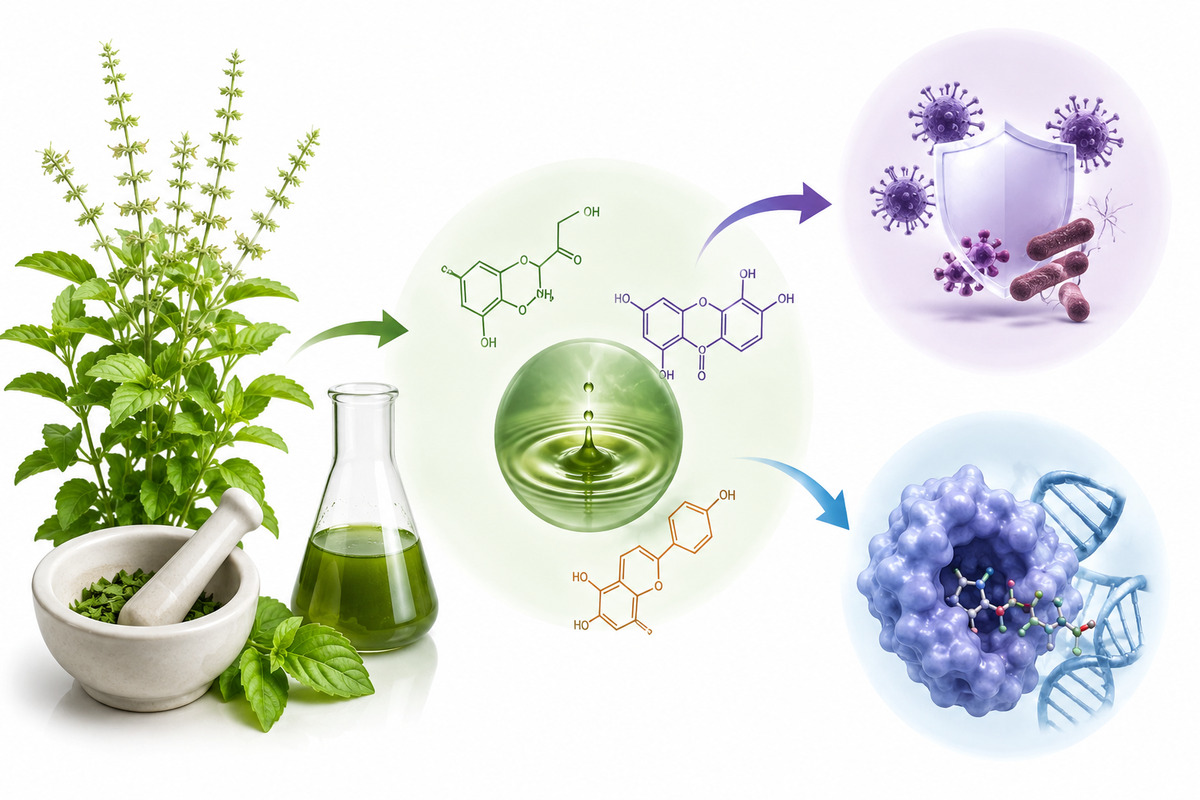
From Phytochemicals to Molecular Targets: Integrated Antioxidant, Antimicrobial and In Silico Characterization of Ocimum americanum L.
1
Department of Biotechnology, St. Joseph’s College (Autonomous), Tiruchirappalli, Tamil Nadu 620002, India.
Submission date: 2026-04-10
Final revision date: 2026-06-26
Acceptance date: 2026-06-30
Online publication date: 2026-07-28
Publication date: 2026-07-28
Corresponding author
Asha Monica Alex
Department of Biotechnology, St. Joseph’s College (Autonomous), Tiruchirappalli, Tamil Nadu 620002, India.
Department of Biotechnology, St. Joseph’s College (Autonomous), Tiruchirappalli, Tamil Nadu 620002, India.
Journal of Medico Informatics 2026;02(Issue 03):28-39
HIGHLIGHTS
- Ocimum americanum leaves showed abundant flavonoids, phenolics, and tannins overall.
- Aqueous extracts demonstrated strongest antioxidant activity across multiple validated assays.
- Aqueous extracts exhibited bactericidal activity against Proteus vulgaris with MIC.
- Dehydrodieugenol showed favorable binding toward bacterial DNA gyrase B protein.
- Computational findings support bioactive potential, requiring further experimental validation studies.
KEYWORDS
TOPICS
ABSTRACT
Cancer is still among the major causes of death in the world and the rates are on the rise especially in the developing nations like India. The weakness of traditional medicines and the increasing disease burden have necessitated the need to investigate plant based bioactive compounds as an alternative form of medicine. The current research paper explores the phytochemical constituents, antioxidant properties, and antimicrobial property of Ocimum americanum leaf extracts grown in Tamil Nadu, India. Qualitative phytochemical screening has identified the availability of bioactive constituents such as flavonoids, alkaloids, tannins, phenols, saponins and terpenoids in the different solvent extracts. Significant total flavonoids (178 mg/g), phenols (68.41 mg/g), tannin (58.47 mg/g), and carotenoid were found in the quantitative analysis, showing a high level of phytochemicals. Antioxidant activity evaluated using both the DPPH and ABTS assays displayed concentration-dependent radical scavenging activity with the extract having 30-65% and 41-63% inhibitory activity as compared to the standard ascorbic acid, respectively. Besides, antimicrobial activity assessed through disc diffusion technique showed good inhibitory activity against bacterial pathogens, where the aqueous and methanol extracts were significantly active especially against Proteus vulgaris. The findings demonstrate the great pharmacological potential of O. americanum as a natural source of antioxidant and antimicrobial agents. Comprehensively, this research article confirms the therapeutic interest of O. americanum and indicates its possible use in the design of plant-based medication to treat diseases associated with oxidative stress and microbial infections, including cancer induced complications.
ABBREVIATIONS
ROS – Reactive Oxygen Species
ADMET – Absorption, Distribution, Metabolism, Excretion, and Toxicity
DPPH – 2,2-Diphenyl-1-picrylhydrazyl
ABTS – 2,2′-Azinobis-(3-ethylbenzothiazoline-6-sulfonic acid)
FRAP – Ferric-Reducing Antioxidant Power
TAC – Total Antioxidant Capacity
MIC – Minimum Inhibitory Concentration
MBC – Minimum Bactericidal Concentration
ANOVA – Analysis of Variance
HSD – Honestly Significant Difference
SD – Standard Deviation
CI – Confidence Interval
GI – Gastrointestinal
BBB – Blood–Brain Barrier
CYP – Cytochrome P450
AMES – Ames Mutagenicity Test
PAINS – Pan-Assay Interference Structures
PDB – Protein Data Bank
ATP – Adenosine Triphosphate
DNA – Deoxyribonucleic Acid
CFU – Colony-Forming Units
TPTZ – 2,4,6-Tris(2-pyridyl)-s-triazine
AAE – Ascorbic Acid Equivalent
ESOL – Estimated Solubility
MW – Molecular Weight
TPSA – Topological Polar Surface Area
Log P – Partition Coefficient
UV – Ultraviolet
C20H22O4 – Dehydrodieugenol Molecular Formula
C10H16O2 – Limonene Dioxide 1 Molecular Formula
E. coli – Escherichia coli
S. aureus – Staphylococcus aureus
P. vulgaris – Proteus vulgaris
A. niger – Aspergillus niger
ACKNOWLEDGEMENTS
The authors gratefully acknowledge the Department of Biotechnology, St Joseph’s College (Autonomous), Trichy, Tamil Nadu, India, for providing the laboratory infrastructure, research facilities, and technical support required for conducting the phytochemical, antioxidant, and antimicrobial analyses. The authors also sincerely acknowledge Rapinat Herbarium, St Joseph’s College, Tiruchirappalli, for the botanical authentication of the Ocimum americanum specimen. The authors further thank the respective institutional authorities for their support and encouragement throughout the study.
FUNDING
This research received no external funding. All work was conducted using institutional resources without dedicated grant support.
CONFLICT OF INTEREST
The authors declare that they have no known financial, personal, academic, or other relationships that could inappropriately influence, or be perceived to influence, the work reported in this manuscript. All authors confirm that there are no competing interests to declare.
PEER REVIEW INFORMATION
Article has been screened for originality
© 2026 The Authors. Published by Aayvu Publications Private Limited under CC BY 4.0.
REFERENCES (58)
1.
Al-Khayri JM, Rashmi R, Toppo V, Chole PB, Banadka A, Sudheer WN, Nagella P, Shehata WF, Al-Mssallem MQ, Alessa FM, Almaghasla MI, Rezk AA. (2023), Plant Secondary Metabolites: The Weapons for Biotic Stress Management, Metabolites, 13(6) doi:10.3390/metabo13060716. PMID: 37367873.
2.
Alfei S, Schito GC, Schito AM, Zuccari G. (2024), Reactive Oxygen Species (ROS)-Mediated Antibacterial Oxidative Therapies: Available Methods to Generate ROS and a Novel Option Proposal, Int J Mol Sci, 25(13) doi:10.3390/ijms25137182. PMID: 39000290.
3.
Ali H, Nguta J, Musila F, Ole-Mapenay I, Matara D, Mailu J. (2022), Evaluation of Antimicrobial Activity, Cytotoxicity, and Phytochemical Composition of Ocimum americanum L. (Lamiaceae), Evid Based Complement Alternat Med, 2022:6484578. doi:10.1155/2022/6484578. PMID: 35341141.
4.
Alotaibi BS, Hakami MA, Jawaid T, Alshammari N, Binsuwaidan R, Adnan M. (2024), Identification of potential Escherichia coli DNA gyrase B inhibitors targeting antibacterial therapy: an integrated docking and molecular dynamics simulation study, J Biomol Struct Dyn, 42(17):8885-8896. doi:10.1080/07391102.2023.2249117. PMID: 37608545.
5.
Ancuceanu R, Lascu BE, Draganescu D, Dinu M. (2025), In Silico ADME Methods Used in the Evaluation of Natural Products, Pharmaceutics, 17(8) doi:10.3390/pharmaceutics17081002. PMID: 40871023.
6.
Andrews JM. (2001), Determination of minimum inhibitory concentrations, J Antimicrob Chemother, 48 Suppl 1:5-16. doi:10.1093/jac/48.suppl_1.5. PMID: 11420333.
7.
Ariyanto A, Kusuma WA, Muhaimin M, Kamarulzaman EE, Fakih TM, Muchtaridi M. (2026), Integrated Phytochemical and Pharmacological Insights into Premna serratifolia for Drug Discovery: A Narrative Review, Plants (Basel), 15(14) doi:10.3390/plants15142176. PMID: 42514544.
8.
Atanasov AG, Waltenberger B, Pferschy-Wenzig EM, Linder T, Wawrosch C, Uhrin P, Temml V, Wang L, Schwaiger S, Heiss EH, Rollinger JM, Schuster D, Breuss JM, Bochkov V, Mihovilovic MD, Kopp B, Bauer R, Dirsch VM, Stuppner H. (2015), Discovery and resupply of pharmacologically active plant-derived natural products: A review, Biotechnol Adv, 33(8):1582-1614. doi:10.1016/j.biotechadv.2015.08.001. PMID: 26281720.
9.
Baliyan S, Mukherjee R, Priyadarshini A, Vibhuti A, Gupta A, Pandey RP, Chang CM. (2022), Determination of Antioxidants by DPPH Radical Scavenging Activity and Quantitative Phytochemical Analysis of Ficus religiosa, Molecules, 27(4) doi:10.3390/molecules27041326. PMID: 35209118.
10.
Boonamnaj P, Pandey RB, Sompornpisut P. (2023), Exploring polyamine interactions and binding pockets in SARS-CoV-2 ORF3a, J Mol Graph Model, 122:108487. doi:10.1016/j.jmgm.2023.108487. PMID: 37086515.
11.
C S, S DK, Ragunathan V, Tiwari P, A S, P BD. (2022), Molecular docking, validation, dynamics simulations, and pharmacokinetic prediction of natural compounds against the SARS-CoV-2 main-protease, J Biomol Struct Dyn, 40(2):585-611. doi:10.1080/07391102.2020.1815584. PMID: 32897178.
12.
Chaudhary A, Sharma S, Mittal A, Gupta S, Dua A. (2020), Phytochemical and antioxidant profiling of Ocimum sanctum, J Food Sci Technol, 57(10):3852-3863. doi:10.1007/s13197-020-04417-2. PMID: 32903995.
13.
Chihomvu P, Ganesan A, Gibbons S, Woollard K, Hayes MA. (2024), Phytochemicals in Drug Discovery-A Confluence of Tradition and Innovation, Int J Mol Sci, 25(16) doi:10.3390/ijms25168792. PMID: 39201478.
14.
Daimari J, Deka AK. (2024), Anticancer, antimicrobial and antioxidant activity of CuO-ZnO bimetallic nanoparticles: green synthesised from Eryngium foetidum leaf extract, Sci Rep, 14(1):19506. doi:10.1038/s41598-024-69847-w. PMID: 39174638.
15.
Daina A, Michielin O, Zoete V. (2017), SwissADME: a free web tool to evaluate pharmacokinetics, drug-likeness and medicinal chemistry friendliness of small molecules, Sci Rep, 7:42717. doi:10.1038/srep42717. PMID: 28256516.
16.
Das BK, Al-Amin MM, Russel SM, Kabir S, Bhattacherjee R, Hannan JM. (2014), Phytochemical Screening and Evaluation of Analgesic Activity of Oroxylum indicum, Indian J Pharm Sci, 76(6):571-5. PMID: 25593396.
17.
Dharsono HDA, Putri SA, Kurnia D, Dudi D, Satari MH. (2022), Ocimum Species: A Review on Chemical Constituents and Antibacterial Activity, Molecules, 27(19) doi:10.3390/molecules27196350. PMID: 36234883.
18.
El-Samahy LA, Tartor YH, Abdelkhalek A, Pet I, Ahmadi M, El-Nabtity SM. (2024), Ocimum basilicum and Lagenaria siceraria Loaded Lignin Nanoparticles as Versatile Antioxidant, Immune Modulatory, Anti-Efflux, and Antimicrobial Agents for Combating Multidrug-Resistant Bacteria and Fungi, Antioxidants (Basel), 13(7) doi:10.3390/antiox13070865. PMID: 39061933.
19.
Eshboev F, Mamadalieva N, Nazarov PA, Hussain H, Katanaev V, Egamberdieva D, Azimova S. (2024), Antimicrobial Action Mechanisms of Natural Compounds Isolated from Endophytic Microorganisms, Antibiotics (Basel), 13(3) doi:10.3390/antibiotics13030271. PMID: 38534706.
20.
Fernandes RP, Trindade MA, Tonin FG, Lima CG, Pugine SM, Munekata PE, Lorenzo JM, de Melo MP. (2016), Evaluation of antioxidant capacity of 13 plant extracts by three different methods: cluster analyses applied for selection of the natural extracts with higher antioxidant capacity to replace synthetic antioxidant in lamb burgers, J Food Sci Technol, 53(1):451-60. doi:10.1007/s13197-015-1994-x. PMID: 26787964.
21.
Ghosh P, Das C, Biswas S, Nag SK, Dutta A, Biswas M, Sil S, Hazra L, Ghosh C, Das S, Saha M, Mondal N, Mandal S, Ghosh A, Karmakar S, Chatterjee S. (2020), Phytochemical composition analysis and evaluation of in vitro medicinal properties and cytotoxicity of five wild weeds: A comparative study, F1000Res, 9:493. doi:10.12688/f1000research.22966.1. PMID: 32676186.
22.
Haido MH, Matti AH, Taher SM. (2024), Optimization of Extraction Conditions of Bioactive Compounds From Kurdistan Species Urtica dioica, Cureus, 16(5):e61146. doi:10.7759/cureus.61146. PMID: 38933631.
23.
Heinrich M, Jalil B, Abdel-Tawab M, Echeverria J, Kulic Z, McGaw LJ, Pezzuto JM, Potterat O, Wang JB. (2022), Best Practice in the chemical characterisation of extracts used in pharmacological and toxicological research-The ConPhyMP-Guidelines, Front Pharmacol, 13:953205. doi:10.3389/fphar.2022.953205. PMID: 36176427.
24.
Huh JS, Choi H, Choi SW, Park C, Choi MS. (2026), Antioxidative and Antimicrobial Activities of Ethanol and Hot-Water Extracts from Quercus acuta, Antioxidants (Basel), 15(2) doi:10.3390/antiox15020193. PMID: 41750574.
25.
Hussen EM, Endalew SA. (2023), In vitro antioxidant and free-radical scavenging activities of polar leaf extracts of Vernonia amygdalina, BMC Complement Med Ther, 23(1):146. doi:10.1186/s12906-023-03923-y. PMID: 37143058.
26.
Ilyasov IR, Beloborodov VL, Selivanova IA, Terekhov RP. (2020), ABTS/PP Decolorization Assay of Antioxidant Capacity Reaction Pathways, Int J Mol Sci, 21(3) doi:10.3390/ijms21031131. PMID: 32046308.
27.
Jancy Mary E, Inbathamizh L, Pandey VK, Shoba G, Thapliyal S, Shaikh AM, Kovacs B. (2026), Development & assessment of polyherbal extracts for treating oral cancer by integrating phytochemistry, bioactivities, and network pharmacology, Sci Rep, 16(1) doi:10.1038/s41598-026-53348-z. PMID: 42431918.
28.
Jasicka-Misiak I, Shanaida M, Hudz N, Wieczorek PP. (2021), Phytochemical and Pharmacological Evaluation of the Residue By-Product Developed from the Ocimum americanum (Lamiaceae) Postdistillation Waste, Foods, 10(12) doi:10.3390/foods10123063. PMID: 34945615.
29.
Jomova K, Raptova R, Alomar SY, Alwasel SH, Nepovimova E, Kuca K, Valko M. (2023), Reactive oxygen species, toxicity, oxidative stress, and antioxidants: chronic diseases and aging, Arch Toxicol, 97(10):2499-2574. doi:10.1007/s00204-023-03562-9. PMID: 37597078.
30.
Kim EJ, Kim KH, Nam YK. (2025), Molecular Characterization of Hemopexin in the Siberian Sturgeon (Acipenser baerii): Evolutionary Insights and Differential Expression Under Immune and Thermal Stresses, Int J Mol Sci, 26(16) doi:10.3390/ijms26167934. PMID: 40869255.
31.
Kowalska-Krochmal B, Dudek-Wicher R. (2021), The Minimum Inhibitory Concentration of Antibiotics: Methods, Interpretation, Clinical Relevance, Pathogens, 10(2) doi:10.3390/pathogens10020165. PMID: 33557078.
32.
Kumar A, P N, Kumar M, Jose A, Tomer V, Oz E, Proestos C, Zeng M, Elobeid T, K S, Oz F. (2023), Major Phytochemicals: Recent Advances in Health Benefits and Extraction Method, Molecules, 28(2) doi:10.3390/molecules28020887. PMID: 36677944.
33.
Kumar S, Sandhir R, Ojha S. (2014), Evaluation of antioxidant activity and total phenol in different varieties of Lantana camara leaves, BMC Res Notes, 7:560. doi:10.1186/1756-0500-7-560. PMID: 25145266.
34.
Lee KJ, Oh YC, Cho WK, Ma JY. (2015), Antioxidant and Anti-Inflammatory Activity Determination of One Hundred Kinds of Pure Chemical Compounds Using Offline and Online Screening HPLC Assay, Evid Based Complement Alternat Med, 2015:165457. doi:10.1155/2015/165457. PMID: 26504472.
35.
Liu S, Liu J, Wang Y, Deng F, Deng Z. (2025), Oxidative Stress: Signaling Pathways, Biological Functions, and Disease, MedComm (2020), 6(7):e70268. doi:10.1002/mco2.70268. PMID: 40599237.
36.
Ma Z, Ajibade A, Zou X. (2024), Docking strategies for predicting protein-ligand interactions and their application to structure-based drug design, Commun Inf Syst, 24(3):199-230. doi:10.4310/cis.241021221101. PMID: 39584017.
37.
Mahendran G, Vimolmangkang S. (2023), Chemical compositions, antioxidant, antimicrobial, and mosquito larvicidal activity of Ocimum americanum L. and Ocimum basilicum L. leaf essential oils, BMC Complement Med Ther, 23(1):390. doi:10.1186/s12906-023-04214-2. PMID: 37898811.
38.
Maluwa C, Zinan'dala B, Chuljerm H, Parklak W, Kulprachakarn K. (2026), Ethnobotany, Phytochemistry, and Pharmacological Activities of Ocimum Species in Low- and Middle-Income Countries: A Systematic Review, Int J Mol Sci, 27(12) doi:10.3390/ijms27125540. PMID: 42353254.
39.
Manful CF, Fordjour E, Subramaniam D, Sey AA, Abbey L, Thomas R. (2025), Antioxidants and Reactive Oxygen Species: Shaping Human Health and Disease Outcomes, Int J Mol Sci, 26(15) doi:10.3390/ijms26157520. PMID: 40806653.
40.
McCloud TG. (2010), High throughput extraction of plant, marine and fungal specimens for preservation of biologically active molecules, Molecules, 15(7):4526-63. doi:10.3390/molecules15074526. PMID: 20657375.
41.
Michiu D, Socaciu MI, Fogarasi M, Jimborean AM, Ranga F, Muresan V, Semeniuc CA. (2022), Implementation of an Analytical Method for Spectrophotometric Evaluation of Total Phenolic Content in Essential Oils, Molecules, 27(4) doi:10.3390/molecules27041345. PMID: 35209133.
42.
Morabbi Najafabad A, Jamei R. (2014), Free radical scavenging capacity and antioxidant activity of methanolic and ethanolic extracts of plum (Prunus domestica L.) in both fresh and dried samples, Avicenna J Phytomed, 4(5):343-53. PMID: 25386397.
43.
Muhmood MA, Safi F, Ahmed MM, Almeani SAL. (2025), Syzygium aromaticum Phytoconstituents Target SARS-CoV-2: Integrating Molecular Docking, Dynamics, Pharmacokinetics, and miR-21 rs1292037 Genotyping, Viruses, 17(7) doi:10.3390/v17070951. PMID: 40733568.
44.
Muteeb G, Rehman MT, Shahwan M, Aatif M. (2023), Origin of Antibiotics and Antibiotic Resistance, and Their Impacts on Drug Development: A Narrative Review, Pharmaceuticals (Basel), 16(11) doi:10.3390/ph16111615. PMID: 38004480.
45.
Ouandaogo HS, Diallo S, Odari E, Kinyua J. (2023), Phytochemical Screening and GC-MS Analysis of Methanolic and Aqueous Extracts of Ocimum kilimandscharicum Leaves, ACS Omega, 8(50):47560-47572. doi:10.1021/acsomega.3c05554. PMID: 38144100.
46.
Patil R, Das S, Stanley A, Yadav L, Sudhakar A, Varma AK. (2010), Optimized hydrophobic interactions and hydrogen bonding at the target-ligand interface leads the pathways of drug-designing, PLoS One, 5(8):e12029. doi:10.1371/journal.pone.0012029. PMID: 20808434.
47.
Platzer M, Kiese S, Herfellner T, Schweiggert-Weisz U, Miesbauer O, Eisner P. (2021), Common Trends and Differences in Antioxidant Activity Analysis of Phenolic Substances Using Single Electron Transfer Based Assays, Molecules, 26(5) doi:10.3390/molecules26051244. PMID: 33669139.
48.
Rai M, Singh AV, Paudel N, Kanase A, Falletta E, Kerkar P, Heyda J, Barghash RF, Pratap Singh S, Soos M. (2023), Herbal concoction Unveiled: A computational analysis of phytochemicals' pharmacokinetic and toxicological profiles using novel approach methodologies (NAMs), Curr Res Toxicol, 5:100118. doi:10.1016/j.crtox.2023.100118. PMID: 37609475.
49.
Salam MA, Al-Amin MY, Pawar JS, Akhter N, Lucy IB. (2023), Conventional methods and future trends in antimicrobial susceptibility testing, Saudi J Biol Sci, 30(3):103582. doi:10.1016/j.sjbs.2023.103582. PMID: 36852413.
50.
Sharma M, Bharti S, Goswami A, Mallubhotla S. (2023), Diversity, Antimicrobial, Antioxidant, and Anticancer Activity of Culturable Fungal Endophyte Communities in Cordia dichotoma, Molecules, 28(19) doi:10.3390/molecules28196926. PMID: 37836769.
51.
Smith KP, Richmond DL, Brennan-Krohn T, Elliott HL, Kirby JE. (2017), Development of MAST: A Microscopy-Based Antimicrobial Susceptibility Testing Platform, SLAS Technol, 22(6):662-674. doi:10.1177/2472630317727721. PMID: 28837780.
52.
Sun W, Shahrajabian MH. (2023), Therapeutic Potential of Phenolic Compounds in Medicinal Plants-Natural Health Products for Human Health, Molecules, 28(4) doi:10.3390/molecules28041845. PMID: 36838831.
53.
Travis CR, McMaster J, Rivas F. (2026), Advances in Natural Product Extraction: Established and Emerging Technologies, Molecules, 31(7) doi:10.3390/molecules31071136. PMID: 41976179.
54.
Tungmunnithum D, Thongboonyou A, Pholboon A, Yangsabai A. (2018), Flavonoids and Other Phenolic Compounds from Medicinal Plants for Pharmaceutical and Medical Aspects: An Overview, Medicines (Basel), 5(3) doi:10.3390/medicines5030093. PMID: 30149600.
55.
Vanajothi R. (2026), AutoDock: A Comprehensive Molecular Docking Methodology, Application Steps, and High-Accuracy Screening Approach with Detailed Case Study, Journal of Medico Informatics, 2(1):24-30. doi:10.64659/jomi/211253. PMID.
56.
Vaou N, Stavropoulou E, Voidarou CC, Tsakris Z, Rozos G, Tsigalou C, Bezirtzoglou E. (2022), Interactions between Medical Plant-Derived Bioactive Compounds: Focus on Antimicrobial Combination Effects, Antibiotics (Basel), 11(8) doi:10.3390/antibiotics11081014. PMID: 36009883.
57.
Vinogradova N, Vinogradova E, Chaplygin V, Mandzhieva S, Kumar P, Rajput VD, Minkina T, Seth CS, Burachevskaya M, Lysenko D, Singh RK. (2023), Phenolic Compounds of the Medicinal Plants in an Anthropogenically Transformed Environment, Molecules, 28(17) doi:10.3390/molecules28176322. PMID: 37687151.
58.
Yan F, Yu X, Jing Y. (2018), Optimized preparation, characterization, and antioxidant activity of chitooligosaccharide-glycine Maillard reaction products, J Food Sci Technol, 55(2):712-720. doi:10.1007/s13197-017-2982-0. PMID: 29391636.
| ISSN: | 3108-2696 |

We process personal data collected when visiting the website. The function of obtaining information about users and their behavior is carried out by voluntarily entered information in forms and saving cookies in end devices. Data, including cookies, are used to provide services, improve the user experience and to analyze the traffic in accordance with the Privacy policy. Data are also collected and processed by Google Analytics tool (more).
You can change cookies settings in your browser. Restricted use of cookies in the browser configuration may affect some functionalities of the website.
You can change cookies settings in your browser. Restricted use of cookies in the browser configuration may affect some functionalities of the website.