About the Journal
Scope of the Journal
Indexed In
Journal Information
Archive
Author Instructions
Current issue
Editorial Board
Journal Policy
AI Policy
APC Policy
Authorship Policy
Author Recognition Policy
Citation Policy
Conflict of Interest (COI) Policy
Copyright Policy
Data Availability Policy
DEI Policy
Digital Archiving Policy
Ethical Approval Policy
Funding Policy
Image Policy
Open Access Policy
Ownership & Governance
Peer Review Policy
Personal Data Protection Policy
Plagiarism Policy
Post-Publication Policy
Preprint Policy
Submit Manuscript
Contact
Journal Policy
AI Policy
APC Policy
Authorship Policy
Author Recognition Policy
Citation Policy
Conflict of Interest (COI) Policy
Copyright Policy
Data Availability Policy
DEI Policy
Digital Archiving Policy
Ethical Approval Policy
Funding Policy
Image Policy
Open Access Policy
Ownership & Governance
Peer Review Policy
Personal Data Protection Policy
Plagiarism Policy
Post-Publication Policy
Preprint Policy


CASE REPORT
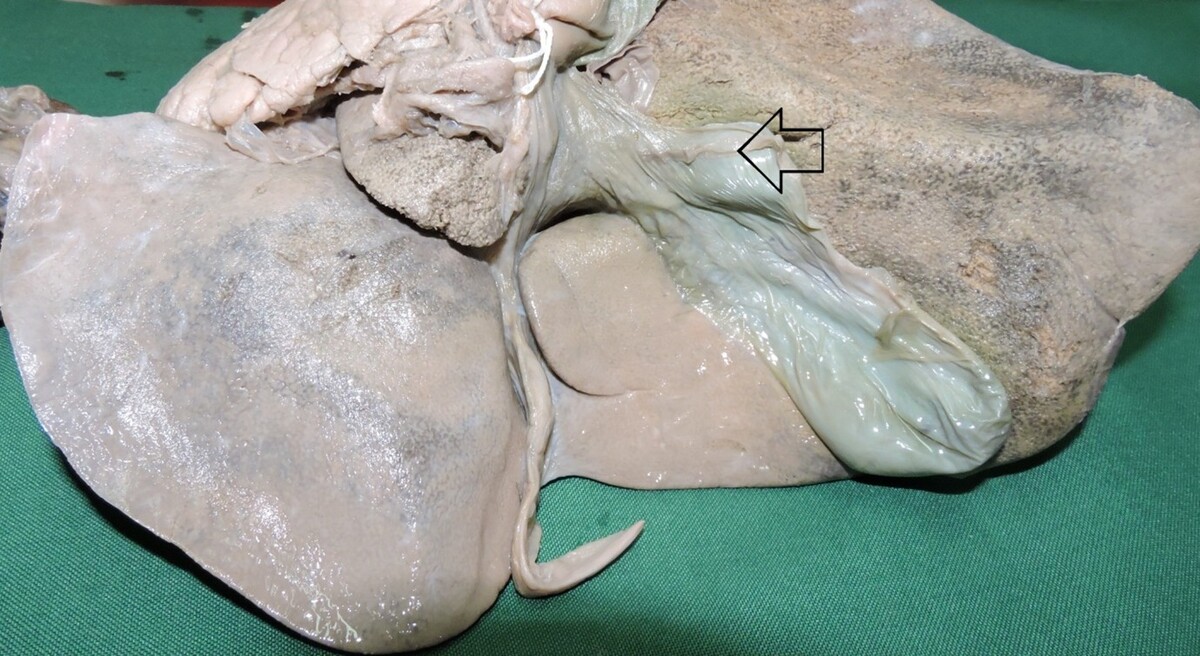
Anatomical Variations of the Human Gallbladder and their Proteomic and Clinical Implications: A Cadaveric Case Study
1
Department of Anatomy, All India Institute of Medical Sciences (AIIMS), Nagpur, Maharashtra, India – 441108, India
2
Department of Anatomy, Palakkad institute of medical sciences,
Walayar, Palakkad, Kerala, India, India
Submission date: 2026-01-04
Final revision date: 2026-02-27
Acceptance date: 2026-03-10
Online publication date: 2026-04-28
Publication date: 2026-04-28
Corresponding author
Kirubhanand Chandrasekaran
Department of Anatomy, All India Institute of Medical Sciences (AIIMS), Nagpur, Maharashtra, India – 441108, India
Department of Anatomy, All India Institute of Medical Sciences (AIIMS), Nagpur, Maharashtra, India – 441108, India
Journal of Medico Informatics 2026;02(Issue 02):1-5
HIGHLIGHTS
- Gallbladder variations influence bile flow, causing stasis, gallstones, and complications
- Hartmann’s pouch and Phrygian cap are key clinically significant anatomical variations
- Mucin proteins promote cholesterol crystallization and gallstone formation mechanisms
- Inflammatory cytokines and ECM remodeling drive fibrosis and structural gallbladder changes
- AI-integrated medical informatics enables predictive modeling of gallbladder disease risk
KEYWORDS
Hartmann’s pouchPhrygian cap deformityMucin proteinsGalGlbladder anatomical variationsGallstone formation
TOPICS
ABSTRACT
The gallbladder is an important component of the hepatobiliary system and exhibits several anatomical variations that may have significant clinical and surgical implications. Variations such as Hartmann’s pouch, Phrygian cap deformity, septate gallbladder, and diverticula are often asymptomatic but may predispose individuals to bile stasis, gallstone formation, inflammation, and biliary obstruction. The present study analyses morphological variations of the human gallbladder observed in cadaveric specimens and correlates these anatomical findings with biochemical markers and potential protein involvement in gallbladder disease progression. Emphasis is placed on proteins involved in bile metabolism, inflammation, extracellular matrix remodelling, and cholesterol transport, which may contribute to gallstone formation and gallbladder structural changes. The study further proposes a hypothesis linking mucin proteins, inflammatory cytokines, and fibrosis-related proteins to the development of Hartmann’s pouch, bile stasis, and gallstone formation. Additionally, a medical informatics framework is proposed for integrating anatomical, biochemical, proteomic, and imaging data to develop predictive models for gallbladder disease and surgical risk assessment. Understanding the relationship between anatomical variations and protein expression patterns may help in early diagnosis, personalized treatment strategies, and improved surgical planning. This study highlights the importance of integrating anatomy, biochemistry, proteomics, and medical informatics to better understand gallbladder diseases and their complications.
ABBREVIATIONS
GB – Gallbladder
ECM – Extracellular Matrix
MMP – Matrix Metalloproteinase
IL-6 – Interleukin-6
TNF-α – Tumor Necrosis Factor Alpha
TGF-β – Transforming Growth Factor Beta
CRP – C-Reactive Protein
ABCG5 – ATP-Binding Cassette Subfamily G Member 5
ABCG8 – ATP-Binding Cassette Subfamily G Member 8
CFTR – Cystic Fibrosis Transmembrane Conductance Regulator
ACKNOWLEDGEMENTS
The authors gratefully acknowledge the Karuna Medical College, Chittur, Palakkad, Kerala, India, for providing the cadaveric specimens and necessary facilities to carry out this study. The authors also express their sincere respect and gratitude to the individuals who donated their bodies for medical education and research, without whom this study would not have been possible.
FUNDING
This research received no external funding. All work was conducted using institutional resources without dedicated grant support.
CONFLICT OF INTEREST
The authors declare that they have no known financial, personal, academic, or other relationships that could inappropriately influence, or be perceived to influence, the work reported in this manuscript. All authors confirm that there are no competing interests to declare.
PEER REVIEW INFORMATION
Article has been screened for originality
© 2026 The Authors. Published by Aayvu Publications Private Limited under CC BY 4.0.
REFERENCES (23)
1.
Adhikari B, Neito LM, Adhikari B, Dhital A, Attar C. (2024), Hydrops Gallbladder Caused by Cystic Duct Fibrosis Leading to Mirizzi Syndrome: A Case Report, Cureus, 10.7759/cureus.68328 doi:10.7759/cureus.68328. PMID: 39350813.
2.
Çerçi SS, Özbek FM, Çerçi C, Baykal B, Eroğlu HE, Baykal Z, Yıldız M, Sağlam S, Yeşildağ A. (2009), Gallbladder function and dynamics of bile flow in asymptomatic gallstone disease, World Journal of Gastroenterology, 15(22) doi:10.3748/wjg.15.2763. PMID: 19522027.
3.
Cheng S, Zhang Y, Jiang L, Li J, Jiang R, Wang F. (2025), The association between inflammatory biomarkers and gallstones in Americans under 50 years old, BMC Gastroenterology, 25(1) doi:10.1186/s12876-025-03994-w. PMID: 40399796.
4.
Cullen JM, Stalker MJ, (2016), Liver and Biliary System Jubb, Kennedy & Palmer's Pathology of Domestic Animals: Volume 2. 10.1016/b978-0-7020-5318-4.00008-5, p 258-352.e1 doi:10.1016/b978-0-7020-5318-4.00008-5. PMCID: PMC7149729.
5.
Ding F, Hu Q, Wang Y, Jiang M, Cui Z, Guo R, Liu L, Chen F, Hu H, Zhao G. (2023), Smooth muscle cells, interstitial cells and neurons in the gallbladder (GB): Functional syncytium of electrical rhythmicity and GB motility (Review), International Journal of Molecular Medicine, 51(4) doi:10.3892/ijmm.2023.5236. PMID: 36928163.
6.
Finzi L, Barbu V, Burgel P-R, Mergey M, Kirkwood KS, Wick EC, Scoazec J-Y, Peschaud F, Paye F, Nadel JA, Housset C. (2006), MUC5AC, a Gel-Forming Mucin Accumulating in Gallstone Disease, Is Overproduced via an Epidermal Growth Factor Receptor Pathway in the Human Gallbladder, The American Journal of Pathology, 169(6):2031-2041. doi:10.2353/ajpath.2006.060146. PMID: 17148666.
7.
Hahm JS, Sung IK, Yang SC, Rhee JC, Lee MH, Kee CS, Park KN, Jung PJ. (1992), Biliary Proteins in Patients with and without Gallstones, The Korean Journal of Internal Medicine, 7(1):18-25. doi:10.3904/kjim.1992.7.1.18. PMID: 1477026 .
8.
Jesani S, Romero AL, Bozkurt SB, Samak AAA, Romero J, Sookdeo J, Naik A. (2022), Mirizzi Syndrome: An Unusual Complication of Cholelithiasis, Journal of Community Hospital Internal Medicine Perspectives, 12(6):79-82. doi:10.55729/2000-9666.1114. PMID: 36816165.
9.
Khan KS, Sajid MA, McMahon RK, Mahmud S, Nassar AHM. (2020), Hartmann's Pouch Stones and Laparoscopic Cholecystectomy: The Challenges and the Solutions, JSLS : Journal of the Society of Laparoscopic & Robotic Surgeons, 24(3) doi:10.4293/jsls.2020.00043. PMID: 32831544.
10.
Kidambi S, Patel SB. (2008), Cholesterol and non-cholesterol sterol transporters: ABCG5, ABCG8 and NPC1L1: a review, Xenobiotica, 38(7-8):1119-1139. doi:10.1080/00498250802007930. PMID: 18668442.
11.
Liu Z, Kemp TJ, Gao YT, Corbel A, McGee EE, Wang B, Shen MC, Rashid A, Hsing AW, Hildesheim A, Pfeiffer RM, Pinto LA, Koshiol J. (2018), Association of circulating inflammation proteins and gallstone disease, Journal of Gastroenterology and Hepatology, 33(11):1920-1924. doi:10.1111/jgh.14265. PMID: 29671891.
12.
Manka SW, Bihan D, Farndale RW. (2019), Structural studies of the MMP-3 interaction with triple-helical collagen introduce new roles for the enzyme in tissue remodelling, Scientific Reports, 9(1) doi:10.1038/s41598-019-55266-9. PMID: 31827179.
13.
Nagral S. (2005), Anatomy relevant to cholecystectomy, Journal of Minimal Access Surgery, 1(2) doi:10.4103/0972-9941.16527. PMID: 21206646.
14.
Nigam M, Mishra AP, Deb VK, Dimri DB, Tiwari V, Bungau SG, Bungau AF, Radu A-F. (2023), Evaluation of the association of chronic inflammation and cancer: Insights and implications, Biomedicine & Pharmacotherapy, 164 doi:10.1016/j.biopha.2023.115015. PMID: 37321055.
15.
Portincasa P, Di Ciaula A, vanBerge-Henegouwen GP. (2004), Smooth muscle function and dysfunction in gallbladder disease, Current Gastroenterology Reports, 6(2):151-162. doi:10.1007/s11894-004-0043-0. PMID: 15191695.
16.
Reghunath A, Kushvaha S, Ghasi RG, Khanna G, Surana A. (2020), Chronic gallbladder wall thickening: Is it always malignancy?, South African Journal of Radiology, 24(1) doi:10.4102/sajr.v24i1.1844. PMID: 32537253.
17.
Sohail MI, Dönmez-Cakil Y, Szöllősi D, Stockner T, Chiba P. (2021), The Bile Salt Export Pump: Molecular Structure, Study Models and Small-Molecule Drugs for the Treatment of Inherited BSEP Deficiencies, International Journal of Molecular Sciences, 22(2) doi:10.3390/ijms22020784. PMID: 33466755.
18.
Sun H, Warren J, Yip J, Ji Y, Hao S, Han W, Ding Y. (2022), Factors Influencing Gallstone Formation: A Review of the Literature, Biomolecules, 12(4) doi:10.3390/biom12040550. PMID: 35454138.
19.
Takahashi H, Raj R, Hughes A, Katz O, Gunasekaran G. (2026), A Systematic Review of Gallbladder Anomalies, JSLS : Journal of the Society of Laparoscopic & Robotic Surgeons, 30(1) doi:10.4293/jsls.2025.00102. PMID: 41584374.
20.
Wang X, Zhang H, Bai Z, Xie X, Feng Y. (2025), Current status of artificial intelligence analysis for the diagnosis of gallbladder diseases using ultrasonography: a scoping review, Translational Gastroenterology and Hepatology, 10:12-12. doi:10.21037/tgh-24-61. PMID: 39944586.
21.
Yason K, Gonza KG, Michael O, William B, Munabi I, Michael K, Mircea-Catalin F. (2024), Anatomical Variations of the Gallbladder and Bile Ducts: An MRI Study, International Journal of Hepatology, 2024(1) doi:10.1155/2024/3877814. PMID: 39464874.
22.
Yoo K-S, Choi HS, Jun DW, Lee HL, Lee OY, Yoon BC, Lee KG, Paik SS, Kim YS, Lee J. (2016), MUC Expression in Gallbladder Epithelial Tissues in Cholesterol-Associated Gallbladder Disease, Gut and Liver, 10(5):851-858. doi:10.5009/gnl15600. PMID: 27563024.
23.
Zhao Z, Yang Y, Wu S, Yao D. (2024), Role of Secretory Mucins in the Occurrence and Development of Cholelithiasis, Biomolecules, 14(6) doi:10.3390/biom14060676. PMID: 38927079.
| ISSN: | 3108-2696 |

We process personal data collected when visiting the website. The function of obtaining information about users and their behavior is carried out by voluntarily entered information in forms and saving cookies in end devices. Data, including cookies, are used to provide services, improve the user experience and to analyze the traffic in accordance with the Privacy policy. Data are also collected and processed by Google Analytics tool (more).
You can change cookies settings in your browser. Restricted use of cookies in the browser configuration may affect some functionalities of the website.
You can change cookies settings in your browser. Restricted use of cookies in the browser configuration may affect some functionalities of the website.
