
REVIEW PAPER
From Big Data to Smart Health: Machine Learning Approaches Shaping the Future of Biomedicine
1
Electric Power Research Institute, 1300 W W T Harris Blvd, Charlotte, NC, USA – 28262.
2
Lowe's Home Improvement, 1000 Lowe's Blvd, Mooresville, NC – 28117.
Submission date: 2025-09-16
Final revision date: 2025-11-17
Acceptance date: 2025-12-07
Online publication date: 2026-01-28
Publication date: 2026-01-28
Corresponding author
Journal of Medico Informatics 2026;02(Issue 01):1-11
HIGHLIGHTS
- Artificial intelligence transforms healthcare through predictive, personalized, and efficient medical systems.
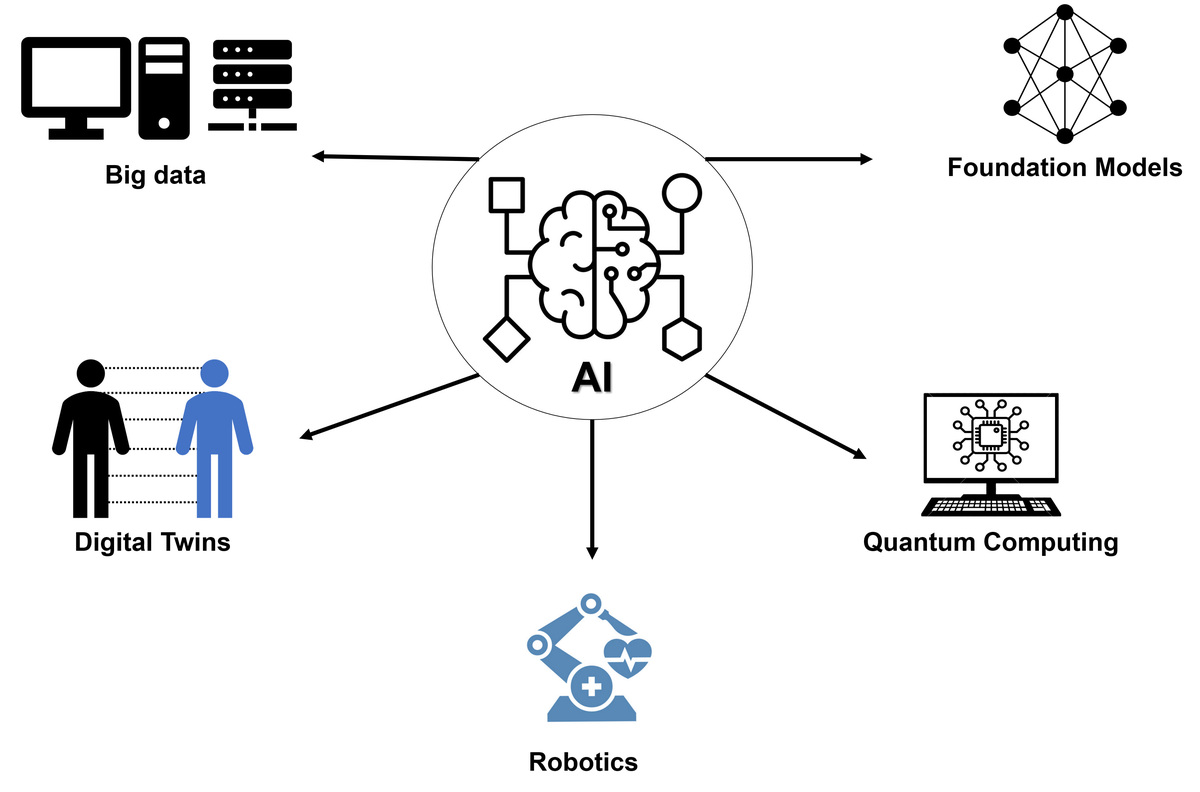
- Foundation models and generative AI enhance diagnostics, research, and clinical decision-making.
- Digital twins enable personalized medicine, surgical planning, and real-time patient simulation.
- Quantum computing accelerates drug discovery, medical imaging analysis, and treatment optimization.
- AI-driven smart health systems improve remote monitoring, decision support, and outcomes.
KEYWORDS
Artificial IntelligenceMachine LearningDigital TwinsPrecision MedicineClinical DecisionSupport SystemsHealth Care
TOPICS
ABSTRACT
The convergence of artificial intelligence, machine learning, and big data analytics continues to revolutionize healthcare delivery and biomedical research, creating unprecedented opportunities for precision medicine, enhanced diagnostic accuracy, and personalized therapeutic interventions. This comprehensive review examines the latest developments in AI-driven healthcare, incorporating breakthrough innovations from 2024 and 2025 that are fundamentally reshaping medical practice across diverse applications and clinical specialties. From generative AI and foundation models to digital twins, quantum computing, and ambient intelligence systems, these technologies are establishing new paradigms for healthcare delivery that prioritize predictive, personalized, and proactive medical care. The global AI healthcare market, valued at $20.9 billion in 2024, is projected to reach $148.4 billion by 2029, representing a compound annual growth rate of 48.1% and reflecting the transformative impact of these technologies across diagnostic imaging, clinical decision support, drug discovery, surgical robotics, and patient care delivery. Generative AI in healthcare is expected to reach $2.7 billion in 2024 and approximately $17 billion by 2034, while 85% of healthcare leaders are now exploring or have already adopted generative AI capabilities. These advancements represent a paradigm shift toward more intelligent, predictive, and personalized healthcare delivery systems that extend far beyond traditional machine learning applications. The integration of ambient intelligence technologies, robotic surgical systems, and Internet of Medical Things devices is creating comprehensive healthcare ecosystems that enhance both clinical outcomes and operational efficiency.
ACKNOWLEDGEMENTS
Not Applicable
FUNDING
Not Applicable
CONFLICT OF INTEREST
The authors declare that they have no known financial, personal, academic, or other relationships that could inappropriately influence, or be perceived to influence, the work reported in this manuscript. All authors confirm that there are no competing interests to declare.
PEER REVIEW INFORMATION
Article has been screened for originality
© 2026 The Authors. Published by Aayvu Publications Private Limited under CC BY 4.0.
REFERENCES (74)
1.
Abdalla Osman EI, Mubarak Ismail MME, Hassan Mukhtar MA, Babiker Ahmed AU, Abd Elfrag Mohamed NA, Alamin Ibrahim AA. (2025), Artificial Intelligence and Robotics in Minimally Invasive and Complex Surgical Procedures: A Systematic Review, Cureus, 17(3):e81339. doi:10.7759/cureus.81339. PMID: 40296978.
2.
Abdulmalek S, Nasir A, Jabbar WA, Almuhaya MAM, Bairagi AK, Khan MA, Kee SH. (2022), IoT-Based Healthcare-Monitoring System towards Improving Quality of Life: A Review, Healthcare (Basel), 10(10) doi:10.3390/healthcare10101993. PMID: 36292441.
3.
Ahmed MI, Spooner B, Isherwood J, Lane M, Orrock E, Dennison A. (2023), A Systematic Review of the Barriers to the Implementation of Artificial Intelligence in Healthcare, Cureus, 15(10):e46454. doi:10.7759/cureus.46454. PMID: 37927664.
4.
Al-Garadi MA, Yang YC, Sarker A. (2022), The Role of Natural Language Processing during the COVID-19 Pandemic: Health Applications, Opportunities, and Challenges, Healthcare (Basel), 10(11) doi:10.3390/healthcare10112270. PMID: 36421593.
5.
Albrecht M, Shanks D, Shah T, Hudson T, Thompson J, Filardi T, Wright K, Ator GA, Smith TR. (2025), Enhancing clinical documentation with ambient artificial intelligence: a quality improvement survey assessing clinician perspectives on work burden, burnout, and job satisfaction, JAMIA Open, 8(1):ooaf013. doi:10.1093/jamiaopen/ooaf013. PMID: 39991073.
6.
Aramaki E, Wakamiya S, Yada S, Nakamura Y. (2022), Natural Language Processing: from Bedside to Everywhere, Yearb Med Inform, 31(1):243-253. doi:10.1055/s-0042-1742510. PMID: 35654422.
7.
Asciak L, Kyeremeh J, Luo X, Kazakidi A, Connolly P, Picard F, O'Neill K, Tsaftaris SA, Stewart GD, Shu W. (2025), Digital twin assisted surgery, concept, opportunities, and challenges, NPJ Digit Med, 8(1):32. doi:10.1038/s41746-024-01413-0. PMID: 39815013.
8.
Babic B, Glenn Cohen I, Stern AD, Li Y, Ouellet M. (2025), A general framework for governing marketed AI/ML medical devices, NPJ Digit Med, 8(1):328. doi:10.1038/s41746-025-01717-9. PMID: 40450160.
9.
Bajwa J, Munir U, Nori A, Williams B. (2021), Artificial intelligence in healthcare: transforming the practice of medicine, Future Healthc J, 8(2):e188-e194. doi:10.7861/fhj.2021-0095. PMID: 34286183.
10.
Balloch J, Sridharan S, Oldham G, Wray J, Gough P, Robinson R, Sebire NJ, Khalil S, Asgari E, Tan C, Taylor A, Pimenta D. (2024), Use of an ambient artificial intelligence tool to improve quality of clinical documentation, Future Healthc J, 11(3):100157. doi:10.1016/j.fhj.2024.100157. PMID: 39371531.
11.
Bekbolatova M, Mayer J, Ong CW, Toma M. (2024), Transformative Potential of AI in Healthcare: Definitions, Applications, and Navigating the Ethical Landscape and Public Perspectives, Healthcare (Basel), 12(2) doi:10.3390/healthcare12020125. PMID: 38255014.
12.
Belbase P, Bhusal R, Ghimire SS, Sharma S, Banskota B. (2024), Assuring assistance to healthcare and medicine: Internet of Things, Artificial Intelligence, and Artificial Intelligence of Things, Front Artif Intell, 7:1442254. doi:10.3389/frai.2024.1442254. PMID: 39735232.
13.
Bhagat SV, Kanyal D. (2024), Navigating the Future: The Transformative Impact of Artificial Intelligence on Hospital Management- A Comprehensive Review, Cureus, 16(2):e54518. doi:10.7759/cureus.54518. PMID: 38516434.
14.
Bhuyan SS, Sateesh V, Mukul N, Galvankar A, Mahmood A, Nauman M, Rai A, Bordoloi K, Basu U, Samuel J. (2025), Generative Artificial Intelligence Use in Healthcare: Opportunities for Clinical Excellence and Administrative Efficiency, J Med Syst, 49(1):10. doi:10.1007/s10916-024-02136-1. PMID: 39820845.
15.
Busch F, Kather JN, Johner C, Moser M, Truhn D, Adams LC, Bressem KK. (2024), Navigating the European Union Artificial Intelligence Act for Healthcare, NPJ Digit Med, 7(1):210. doi:10.1038/s41746-024-01213-6. PMID: 39134637.
16.
Chaparro-Cardenas SL, Ramirez-Bautista JA, Terven J, Cordova-Esparza DM, Romero-Gonzalez JA, Ramirez-Pedraza A, Chavez-Urbiola EA. (2025), A Technological Review of Digital Twins and Artificial Intelligence for Personalized and Predictive Healthcare, Healthcare (Basel), 13(14) doi:10.3390/healthcare13141763. PMID: 40724790.
17.
Chen RJ, Wang JJ, Williamson DFK, Chen TY, Lipkova J, Lu MY, Sahai S, Mahmood F. (2023), Algorithmic fairness in artificial intelligence for medicine and healthcare, Nat Biomed Eng, 7(6):719-742. doi:10.1038/s41551-023-01056-8. PMID: 37380750.
18.
Chen Y, Esmaeilzadeh P. (2024), Generative AI in Medical Practice: In-Depth Exploration of Privacy and Security Challenges, J Med Internet Res, 26:e53008. doi:10.2196/53008. PMID: 38457208.
19.
Chow JCL. (2024), Quantum Computing in Medicine, Med Sci (Basel), 12(4) doi:10.3390/medsci12040067. PMID: 39584917.
20.
Dubey A, Tiwari A. (2023), Artificial intelligence and remote patient monitoring in US healthcare market: a literature review, J Mark Access Health Policy, 11(1):2205618. doi:10.1080/20016689.2023.2205618. PMID: 37151736.
21.
Elhaddad M, Hamam S. (2024), AI-Driven Clinical Decision Support Systems: An Ongoing Pursuit of Potential, Cureus, 16(4):e57728. doi:10.7759/cureus.57728. PMID: 38711724.
22.
Ennab M, McHeick H. (2024), Enhancing interpretability and accuracy of AI models in healthcare: a comprehensive review on challenges and future directions, Front Robot AI, 11:1444763. doi:10.3389/frobt.2024.1444763. PMID: 39677978.
23.
Fairburn SC, Jehi L, Bicknell BT, Wilkes BG, Panuganti B. (2025), Applications of quantum computing in clinical care, Front Med (Lausanne), 12:1573016. doi:10.3389/fmed.2025.1573016. PMID: 40337272.
24.
Giansanti D, Morelli S. (2025), Exploring the Potential of Digital Twins in Cancer Treatment: A Narrative Review of Reviews, J Clin Med, 14(10) doi:10.3390/jcm14103574. PMID: 40429568.
25.
Hamilton A. (2024), Artificial Intelligence and Healthcare Simulation: The Shifting Landscape of Medical Education, Cureus, 16(5):e59747. doi:10.7759/cureus.59747. PMID: 38840993.
26.
Han F, Huang X, Wang X, Chen YF, Lu C, Li S, Lu L, Zhang DW. (2025), Artificial Intelligence in Orthopedic Surgery: Current Applications, Challenges, and Future Directions, MedComm (2020), 6(7):e70260. doi:10.1002/mco2.70260. PMID: 40567249.
27.
Huang J, Xu Y, Wang Q, Wang QC, Liang X, Wang F, Zhang Z, Wei W, Zhang B, Huang L, Chang J, Ma L, Ma T, Liang Y, Zhang J, Guo J, Jiang X, Fan X, An Z, Li T, Li X, Shao Z, Qian T, Sun T, Diao B, Yang C, Yu C, Wu Y, Li M, Zhang H, Zeng Y, Zhang Z, Zhu Z, Lv Y, Li A, Chen X, An B, Xiao W, Bai C, Mao Y, Yin Z, Gui S, Su W, Zhu Y, Gao J, He X, Li Y, Jin G, Ao X, Zhai X, Tan H, Yun L, Shi H, Li J, Fan C, Huang K, Harrison E, Leung VCM, Qiu S, Dong Y, Zheng X, Wang G, Zheng Y, Wang Y, Guo J, Wang L, Cheng X, Wang Y, Yang S, Fu M, Fei A. (2025), Foundation models and intelligent decision-making: Progress, challenges, and perspectives, Innovation (Camb), 6(6):100948. doi:10.1016/j.xinn.2025.100948. PMID: 40528892.
28.
Janson G, Grottesi A, Pietrosanto M, Ausiello G, Guarguaglini G, Paiardini A. (2019), Revisiting the "satisfaction of spatial restraints" approach of MODELLER for protein homology modeling, PLoS Comput Biol, 15(12):e1007219. doi:10.1371/journal.pcbi.1007219. PMID: 31846452.
29.
Jerfy A, Selden O, Balkrishnan R. (2024), The Growing Impact of Natural Language Processing in Healthcare and Public Health, Inquiry, 61:469580241290095. doi:10.1177/00469580241290095. PMID: 39396164.
30.
Jeyaraman N, Jeyaraman M, Yadav S, Ramasubramanian S, Balaji S. (2024), Revolutionizing Healthcare: The Emerging Role of Quantum Computing in Enhancing Medical Technology and Treatment, Cureus, 16(8):e67486. doi:10.7759/cureus.67486. PMID: 39310567.
31.
Kaldoudi E. (2024), Smart hospital: The future of healthcare, Comput Struct Biotechnol J, 24:87-88. doi:10.1016/j.csbj.2023.12.011. PMID: 38222115.
32.
Kareemi H, Yadav K, Price C, Bobrovitz N, Meehan A, Li H, Goel G, Masood S, Grant L, Ben-Yakov M, Michalowski W, Vaillancourt C. (2025), Artificial intelligence-based clinical decision support in the emergency department: A scoping review, Acad Emerg Med, 32(4):386-395. doi:10.1111/acem.15099. PMID: 39905631.
33.
Kazemzadeh K, Akhlaghdoust M, Zali A. (2023), Advances in artificial intelligence, robotics, augmented and virtual reality in neurosurgery, Front Surg, 10:1241923. doi:10.3389/fsurg.2023.1241923. PMID: 37693641.
34.
Kim JY, Hasan A, Kellogg KC, Ratliff W, Murray SG, Suresh H, Valladares A, Shaw K, Tobey D, Vidal DE, Lifson MA, Patel M, Raji ID, Gao M, Knechtle W, Tang L, Balu S, Sendak MP. (2024), Development and preliminary testing of Health Equity Across the AI Lifecycle (HEAAL): A framework for healthcare delivery organizations to mitigate the risk of AI solutions worsening health inequities, PLOS Digit Health, 3(5):e0000390. doi:10.1371/journal.pdig.0000390. PMID: 38723025.
35.
Knudsen JE, Ghaffar U, Ma R, Hung AJ. (2024), Clinical applications of artificial intelligence in robotic surgery, J Robot Surg, 18(1):102. doi:10.1007/s11701-024-01867-0. PMID: 38427094.
36.
Ko HYK, Tripathi NK, Mozumder C, Muengtaweepongsa S, Pal I. (2023), Real-Time Remote Patient Monitoring and Alarming System for Noncommunicable Lifestyle Diseases, Int J Telemed Appl, 2023:9965226. doi:10.1155/2023/9965226. PMID: 38020047.
37.
Kok Wah JN. (2025), AI-driven robotic surgery in oncology: advancing precision, personalization, and patient outcomes, J Robot Surg, 19(1):382. doi:10.1007/s11701-025-02555-3. PMID: 40652109.
38.
Lee NK, Kim JS. (2024), Status and Trends of the Digital Healthcare Industry, Healthc Inform Res, 30(3):172-183. doi:10.4258/hir.2024.30.3.172. PMID: 39160777.
39.
Li Q, Hu Z, Wang Y, Li L, Fan Y, King I, Jia G, Wang S, Song L, Li Y. (2024), Progress and opportunities of foundation models in bioinformatics, Brief Bioinform, 25(6) doi:10.1093/bib/bbae548. PMID: 39461902.
40.
Ma R, Vanstrum EB, Lee R, Chen J, Hung AJ. (2020), Machine learning in the optimization of robotics in the operative field, Curr Opin Urol, 30(6):808-816. doi:10.1097/MOU.0000000000000816. PMID: 32925312.
41.
Mahesh N, Devishamani CS, Raghu K, Mahalingam M, Bysani P, Chakravarthy AV, Raman R. (2024), Advancing healthcare: the role and impact of AI and foundation models, Am J Transl Res, 16(6):2166-2179. doi:10.62347/WQWV9220. PMID: 39006256.
42.
Maleki Varnosfaderani S, Forouzanfar M. (2024), The Role of AI in Hospitals and Clinics: Transforming Healthcare in the 21st Century, Bioengineering (Basel), 11(4) doi:10.3390/bioengineering11040337. PMID: 38671759.
43.
Molla G, Bitew M. (2024), Revolutionizing Personalized Medicine: Synergy with Multi-Omics Data Generation, Main Hurdles, and Future Perspectives, Biomedicines, 12(12) doi:10.3390/biomedicines12122750. PMID: 39767657.
44.
Morris MX, Fiocco D, Caneva T, Yiapanis P, Orgill DP. (2024), Current and future applications of artificial intelligence in surgery: implications for clinical practice and research, Front Surg, 11:1393898. doi:10.3389/fsurg.2024.1393898. PMID: 38783862.
45.
Moshawrab M, Adda M, Bouzouane A, Ibrahim H, Raad A. (2023), Smart Wearables for the Detection of Cardiovascular Diseases: A Systematic Literature Review, Sensors (Basel), 23(2) doi:10.3390/s23020828. PMID: 36679626.
46.
Muralitharan S, Nelson W, Di S, McGillion M, Devereaux PJ, Barr NG, Petch J. (2021), Machine Learning-Based Early Warning Systems for Clinical Deterioration: Systematic Scoping Review, J Med Internet Res, 23(2):e25187. doi:10.2196/25187. PMID: 33538696.
47.
Nahar JK, Kachnowski S. (2023), Current and Potential Applications of Ambient Artificial Intelligence, Mayo Clin Proc Digit Health, 1(3):241-246. doi:10.1016/j.mcpdig.2023.05.003. PMID: 40206622.
48.
Ng JJW, Wang E, Zhou X, Zhou KX, Goh CXL, Sim GZN, Tan HK, Goh SSN, Ng QX. (2025), Evaluating the performance of artificial intelligence-based speech recognition for clinical documentation: a systematic review, BMC Med Inform Decis Mak, 25(1):236. doi:10.1186/s12911-025-03061-0. PMID: 40598136.
49.
Niarakis A, Laubenbacher R, An G, Ilan Y, Fisher J, Flobak A, Reiche K, Rodriguez Martinez M, Geris L, Ladeira L, Veschini L, Blinov ML, Messina F, Fonseca LL, Ferreira S, Montagud A, Noel V, Marku M, Tsirvouli E, Torres MM, Harris LA, Sego TJ, Cockrell C, Shick AE, Balci H, Salazar A, Rian K, Hemedan AA, Esteban-Medina M, Staumont B, Hernandez-Vargas E, Martis BS, Madrid-Valiente A, Karampelesis P, Sordo Vieira L, Harlapur P, Kulesza A, Nikaein N, Garira W, Malik Sheriff RS, Thakar J, Tran VDT, Carbonell-Caballero J, Safaei S, Valencia A, Zinovyev A, Glazier JA. (2024), Immune digital twins for complex human pathologies: applications, limitations, and challenges, NPJ Syst Biol Appl, 10(1):141. doi:10.1038/s41540-024-00450-5. PMID: 39616158.
50.
Oliveira JD, Santos HDP, Ulbrich A, Couto JC, Arocha M, Santos J, Costa MM, Faccio D, Tabalipa FO, Nogueira RF. (2025), Development and evaluation of a clinical note summarization system using large language models, Commun Med (Lond), 5(1):376. doi:10.1038/s43856-025-01091-3. PMID: 40877595.
51.
Olyanasab A, Annabestani M. (2024), Leveraging Machine Learning for Personalized Wearable Biomedical Devices: A Review, J Pers Med, 14(2) doi:10.3390/jpm14020203. PMID: 38392636.
52.
Papachristou K, Katsakiori PF, Papadimitroulas P, Strigari L, Kagadis GC. (2024), Digital Twins' Advancements and Applications in Healthcare, Towards Precision Medicine, J Pers Med, 14(11) doi:10.3390/jpm14111101. PMID: 39590593.
53.
Pham T. (2025), Ethical and legal considerations in healthcare AI: innovation and policy for safe and fair use, R Soc Open Sci, 12(5):241873. doi:10.1098/rsos.241873. PMID: 40370601.
54.
Pise AA, Almuzaini KK, Ahanger TA, Farouk A, Pant K, Pareek PK, Nuagah SJ. (2022), Enabling Artificial Intelligence of Things (AIoT) Healthcare Architectures and Listing Security Issues, Comput Intell Neurosci, 2022:8421434. doi:10.1155/2022/8421434. PMID: 36911247.
55.
Rani S, Kumar R, Panda BS, Kumar R, Muften NF, Abass MA, Lozanovic J. (2025), Machine Learning-Powered Smart Healthcare Systems in the Era of Big Data: Applications, Diagnostic Insights, Challenges, and Ethical Implications, Diagnostics (Basel), 15(15) doi:10.3390/diagnostics15151914. PMID: 40804880.
56.
Rehan MW, Rehan MM. (2025), Survey, taxonomy, and emerging paradigms of societal digital twins for public health preparedness, NPJ Digit Med, 8(1):520. doi:10.1038/s41746-025-01737-5. PMID: 40804297.
57.
Saba Raoof S, Durai MAS. (2022), A Comprehensive Review on Smart Health Care: Applications, Paradigms, and Challenges with Case Studies, Contrast Media Mol Imaging, 2022:4822235. doi:10.1155/2022/4822235. PMID: 36247859.
58.
Sagheb E, Ramazanian T, Tafti AP, Fu S, Kremers WK, Berry DJ, Lewallen DG, Sohn S, Maradit Kremers H. (2021), Use of Natural Language Processing Algorithms to Identify Common Data Elements in Operative Notes for Knee Arthroplasty, J Arthroplasty, 36(3):922-926. doi:10.1016/j.arth.2020.09.029. PMID: 33051119.
59.
Sanches PHG, de Melo NC, Porcari AM, de Carvalho LM. (2024), Integrating Molecular Perspectives: Strategies for Comprehensive Multi-Omics Integrative Data Analysis and Machine Learning Applications in Transcriptomics, Proteomics, and Metabolomics, Biology (Basel), 13(11) doi:10.3390/biology13110848. PMID: 39596803.
60.
Santra S, Kukreja P, Saxena K, Gandhi S, Singh OV. (2024), Navigating regulatory and policy challenges for AI enabled combination devices, Front Med Technol, 6:1473350. doi:10.3389/fmedt.2024.1473350. PMID: 39669903.
61.
Shahkoo AA, Abin AA. (2023), Deep reinforcement learning in continuous action space for autonomous robotic surgery, Int J Comput Assist Radiol Surg, 18(3):423-431. doi:10.1007/s11548-022-02789-8. PMID: 36383302.
62.
Shajari S, Kuruvinashetti K, Komeili A, Sundararaj U. (2023), The Emergence of AI-Based Wearable Sensors for Digital Health Technology: A Review, Sensors (Basel), 23(23) doi:10.3390/s23239498. PMID: 38067871.
63.
Sharma A, Badea M, Tiwari S, Marty JL. (2021), Wearable Biosensors: An Alternative and Practical Approach in Healthcare and Disease Monitoring, Molecules, 26(3) doi:10.3390/molecules26030748. PMID: 33535493.
64.
Stults CD, Deng S, Martinez MC, Wilcox J, Szwerinski N, Chen KH, Driscoll S, Washburn J, Jones VG. (2025), Evaluation of an Ambient Artificial Intelligence Documentation Platform for Clinicians, JAMA Netw Open, 8(5):e258614. doi:10.1001/jamanetworkopen.2025.8614. PMID: 40314951.
65.
Sun Y, Deng X, Shao H. (2025), Quantum dual-branch neural networks with transfer learning for early detection of skin cancer, Am J Transl Res, 17(5):3357-3367. doi:10.62347/WOHQ8174. PMID: 40535694.
66.
Suvvari TK, Konakanchi V, Muppavarapu RS, Arigapudi N. (2025), The Potential Role of Quantum Computing in Biomedicine and Healthcare: The Next Frontier Beyond Artificial Intelligence, Cureus, 17(4):e82759. doi:10.7759/cureus.82759. PMID: 40406784.
67.
Thacharodi A, Singh P, Meenatchi R, Tawfeeq Ahmed ZH, Kumar RRS, V N, Kavish S, Maqbool M, Hassan S. (2024), Revolutionizing healthcare and medicine: The impact of modern technologies for a healthier future-A comprehensive review, Health Care Sci, 3(5):329-349. doi:10.1002/hcs2.115. PMID: 39479277.
68.
Trayanova NA, Prakosa A. (2024), Up digital and personal: How heart digital twins can transform heart patient care, Heart Rhythm, 21(1):89-99. doi:10.1016/j.hrthm.2023.10.019. PMID: 37871809.
69.
Van Bulck L, Reading Turchioe M, Topaz M, Song J. (2025), Exploring the full potential of the electronic health record: the application of natural language processing for clinical practice, Eur J Cardiovasc Nurs, 24(2):332-337. doi:10.1093/eurjcn/zvae091. PMID: 38912955.
70.
Wagner M, Bihlmaier A, Kenngott HG, Mietkowski P, Scheikl PM, Bodenstedt S, Schiepe-Tiska A, Vetter J, Nickel F, Speidel S, Worn H, Mathis-Ullrich F, Muller-Stich BP. (2021), A learning robot for cognitive camera control in minimally invasive surgery, Surg Endosc, 35(9):5365-5374. doi:10.1007/s00464-021-08509-8. PMID: 33904989.
71.
Wah JNK. (2025), The rise of robotics and AI-assisted surgery in modern healthcare, J Robot Surg, 19(1):311. doi:10.1007/s11701-025-02485-0. PMID: 40540146.
72.
Wei Q, Pan S, Liu X, Hong M, Nong C, Zhang W. (2025), The integration of AI in nursing: addressing current applications, challenges, and future directions, Front Med (Lausanne), 12:1545420. doi:10.3389/fmed.2025.1545420. PMID: 40007584.
73.
Weiner EB, Dankwa-Mullan I, Nelson WA, Hassanpour S. (2025), Ethical challenges and evolving strategies in the integration of artificial intelligence into clinical practice, PLOS Digit Health, 4(4):e0000810. doi:10.1371/journal.pdig.0000810. PMID: 40198594.
74.
Wong IN, Monteiro O, Baptista-Hon DT, Wang K, Lu W, Sun Z, Nie S, Yin Y. (2024), Leveraging foundation and large language models in medical artificial intelligence, Chin Med J (Engl), 137(21):2529-2539. doi:10.1097/CM9.0000000000003302. PMID: 39497256.
| ISSN: | 3108-2696 |

We process personal data collected when visiting the website. The function of obtaining information about users and their behavior is carried out by voluntarily entered information in forms and saving cookies in end devices. Data, including cookies, are used to provide services, improve the user experience and to analyze the traffic in accordance with the Privacy policy. Data are also collected and processed by Google Analytics tool (more).
You can change cookies settings in your browser. Restricted use of cookies in the browser configuration may affect some functionalities of the website.
You can change cookies settings in your browser. Restricted use of cookies in the browser configuration may affect some functionalities of the website.