About the Journal
Scope of the Journal
Indexed In
Journal Information
Current issue
Archive
Editorial Board
Journal Policy
APC Policy
Authorship Policy
Author Recognition Policy
Citation Policy
Conflict of Interest (COI) Policy
Copyright Policy
Data Availability Policy
DEI Policy
Digital Archiving Policy
Ethical Approval Policy
Funding Policy
Image Policy
Open Access Policy
Ownership & Governance
Peer Review Policy
Personal Data Protection Policy
Plagiarism Policy
Post-Publication Policy
Preprint Policy
Author Instructions
Submit Manuscript
Contact Information
Journal Policy
APC Policy
Authorship Policy
Author Recognition Policy
Citation Policy
Conflict of Interest (COI) Policy
Copyright Policy
Data Availability Policy
DEI Policy
Digital Archiving Policy
Ethical Approval Policy
Funding Policy
Image Policy
Open Access Policy
Ownership & Governance
Peer Review Policy
Personal Data Protection Policy
Plagiarism Policy
Post-Publication Policy
Preprint Policy


RESEARCH PAPER
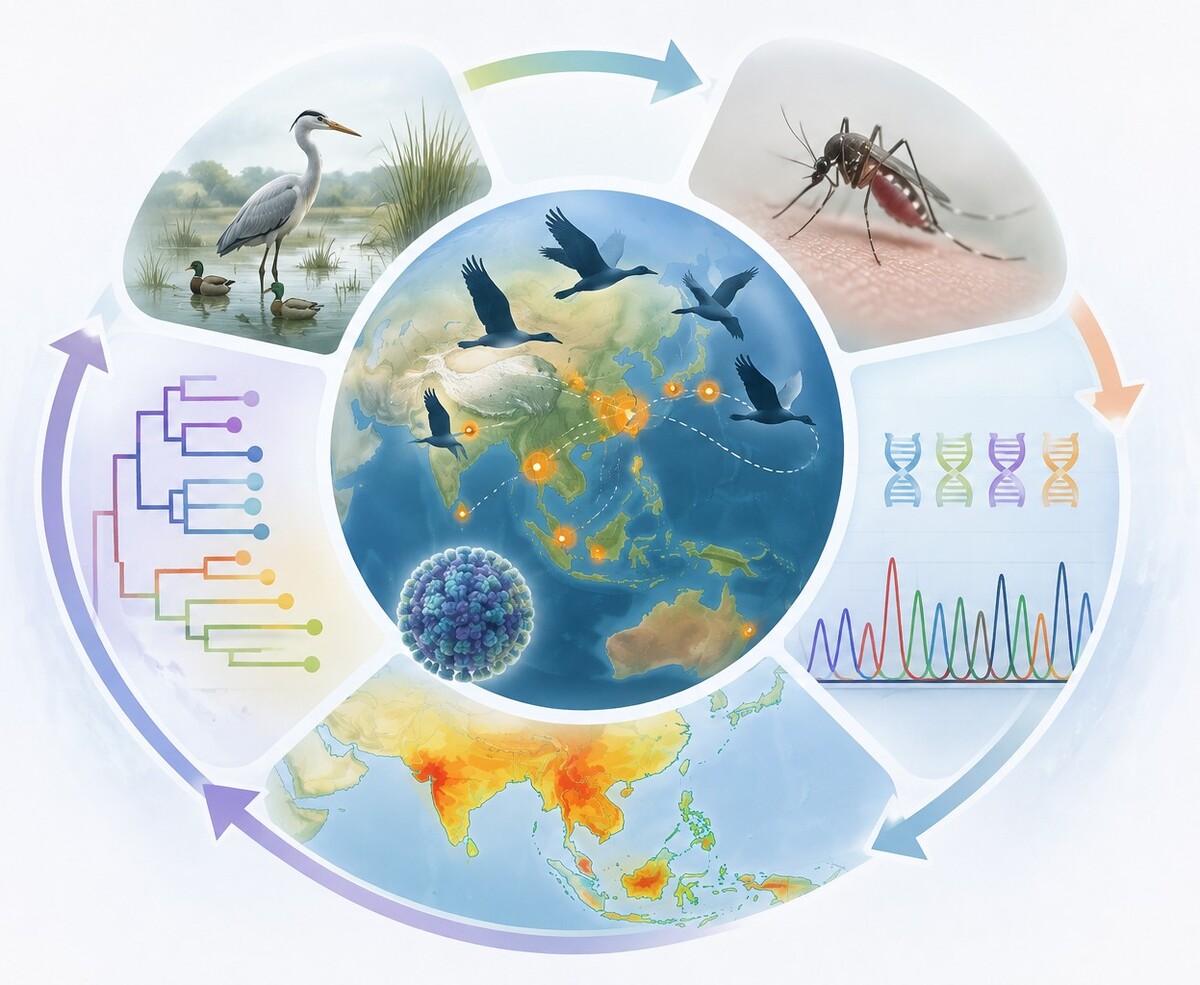
Genetic Diversity and Geographical Distribution of Japanese Encephalitis Virus

1
Faculty of Clinical Research, Sri Ramachandra Institute of Higher Education and Research, Chennai 600116, Tamil Nadu, India
2
Department of Bioinformatics, Sri Ramachandra Institute of Higher Education and Research, Chennai 600116, Tamil Nadu, India
3
Department of Entomology, Texas A&M University, College Station, TX- 77843, United States of America (USA)
4
Sri Ramachandra Faculty of Pharmacy, Sri Ramachandra Institute of Higher Education and Research, Chennai 600116, Tamil Nadu, India
5
Centre for Research Impact & Outcome, Chitkara College of Pharmacy, Chitkara University, Rajpura, 140401, Punjab, India
Submission date: 2026-03-29
Final revision date: 2026-05-09
Acceptance date: 2026-05-15
Online publication date: 2026-07-28
Publication date: 2026-07-28
Corresponding author
Journal of Medico Informatics 2026;02(Issue 03):21-27
HIGHLIGHTS
- Integrative phylogenomics reveals substantial genetic diversity among JEV circulating strains.
- Geospatial mapping links migratory bird routes with JEV transmission patterns.
- East and Southeast Asia showed prominent JEV genetic diversity hotspots.
- Phylogenetic analysis identified distinct clades and strongly supported evolutionary relationships.
- One Health integration supports improved surveillance, vaccination, and vector control.
KEYWORDS
Phylogenetic AnalysisVector-Borne DiseasesJapanese Encephalitis Virus (JEV)Geospatial MappingOne Health Approach
TOPICS
ABSTRACT
Japanese Encephalitis Virus (JEV) is a zoonotic Flavivirus that causes outbreaks of vector-borne encephalitis in Asia, currently endangering approximately four billion individuals. This study seeks to evaluate the genetic variability, phylogenetic relationships, and geographical distribution of JEV to ascertain the virus's transmission and evolution trends. Birds and mosquitoes were identified as the primary vectors for viral transmission, exhibiting significant sequence divergence. GIS indicated that the density of accommodations markedly rose in East and Southeast Asia, especially in China and Japan, while analyzing avian migratory paths. This study evaluated genetic data utilizing BIOEDIT, MEGA, and QGIS software, incorporating spatial data to elucidate the connections between avian migration and JEV transmission. The results underscored the virus's adaptability and evolutionary characteristics, indicating that the One Health approach is more suitable. This research provides critical insights to enhance disease surveillance, vaccine development, and vector management for Japanese Encephalitis control.
ABBREVIATIONS
JEV – Japanese Encephalitis Virus
JE – Japanese Encephalitis
GIS – Geographic Information System
NCBI – National Center for Biotechnology Information
MEGA – Molecular Evolutionary Genetics Analysis
QGIS – Quantum Geographic Information System
DNA – Deoxyribonucleic Acid
RNA – Ribonucleic Acid
ML – Maximum Likelihood
BIC – Bayesian Information Criterion
GTR – General Time Reversible
AI – Artificial Intelligence
ACKNOWLEDGEMENTS
None
FUNDING
This research received no external funding. All work was conducted using institutional resources without dedicated grant support.
CONFLICT OF INTEREST
The authors declare that they have no known financial, personal, academic, or other relationships that could inappropriately influence, or be perceived to influence, the work reported in this manuscript. All authors confirm that there are no competing interests to declare.
PEER REVIEW INFORMATION
Article has been screened for originality
© 2026 The Author(s). This article is distributed under the terms of the Creative Commons Attribution License (CC BY 4.0).
REFERENCES (28)
1.
Adnyana IM, Utomo B, Eljatin DS, Sudaryati NL. (2023), One Health approach and zoonotic diseases in Indonesia: Urgency of implementation and challenges, Narra J, 3(3):e257. doi:10.52225/narra.v3i3.257. PMID: 38455621.
2.
Gao X, Liu H, Wang H, Fu S, Guo Z, Liang G. (2013), Southernmost Asia is the source of Japanese encephalitis virus (genotype 1) diversity from which the viruses disperse and evolve throughout Asia, PLoS Negl Trop Dis, 7(9):e2459. doi:10.1371/journal.pntd.0002459. PMID: 24069502.
3.
Graser A, Sutton T, Bernasocchi M. (2025), The QGIS project: Spatial without compromise, Patterns (N Y), 6(7):101265. doi:10.1016/j.patter.2025.101265. PMID: 40926971.
4.
Guo J, Mi Y, Guo Y, Bai Y, Wang M, Wang W, Wang Y. (2024), Current Advances in Japanese Encephalitis Virus Drug Development, Viruses, 16(2) doi:10.3390/v16020202. PMID: 38399978.
5.
Hameed M, Wahaab A, Nawaz M, Khan S, Nazir J, Liu K, Wei J, Ma Z. (2021), Potential Role of Birds in Japanese Encephalitis Virus Zoonotic Transmission and Genotype Shift, Viruses, 13(3) doi:10.3390/v13030357. PMID: 33668224.
6.
Han N, Adams J, Chen P, Guo ZY, Zhong XF, Fang W, Li N, Wen L, Tao XY, Yuan ZM, Rayner S. (2014), Comparison of genotypes I and III in Japanese encephalitis virus reveals distinct differences in their genetic and host diversity, J Virol, 88(19):11469-79. doi:10.1128/JVI.02050-14. PMID: 25056890.
7.
Janies D. (2019), Phylogenetic Concepts and Tools Applied to Epidemiologic Investigations of Infectious Diseases, Microbiol Spectr, 7(4) doi:10.1128/microbiolspec.AME-0006-2018. PMID: 31325287.
8.
Kulkarni R, Sapkal GN, Kaushal H, Mourya DT. (2018), Japanese Encephalitis: A Brief Review on Indian Perspectives, Open Virol J, 12:121-130. doi:10.2174/1874357901812010121. PMID: 30288200.
9.
Larison B, Lindsay AR, Bossu C, Sorenson MD, Kaplan JD, Evers DC, Paruk J, DaCosta JM, Smith TB, Ruegg K. (2021), Leveraging genomics to understand threats to migratory birds, Evol Appl, 14(6):1646-1658. doi:10.1111/eva.13231. PMID: 34178110.
10.
Li G, Li X, Chen J, Lemey P, Vrancken B, Su S, Dellicour S, Gambaro F. (2025), Tracing more than two decades of Japanese encephalitis virus circulation in mainland China, J Virol, 99(3):e0157524. doi:10.1128/jvi.01575-24. PMID: 39945534.
11.
Liao Y, Islam T, Noorai R, Streich J, Saski C, Cohnstaedt LW, Cooper EA. (2025), Climate Adaptation and Genetic Differentiation in the Mosquito Species Culex tarsalis, Genome Biol Evol, 17(8) doi:10.1093/gbe/evaf143. PMID: 40709571.
12.
Longbottom J, Browne AJ, Pigott DM, Sinka ME, Golding N, Hay SI, Moyes CL, Shearer FM. (2017), Mapping the spatial distribution of the Japanese encephalitis vector, Culex tritaeniorhynchus Giles, 1901 (Diptera: Culicidae) within areas of Japanese encephalitis risk, Parasit Vectors, 10(1):148. doi:10.1186/s13071-017-2086-8. PMID: 28302156.
13.
Markello TC, Adams DR. (2013), Genome-scale sequencing to identify genes involved in Mendelian disorders, Curr Protoc Hum Genet, 79:6 13 1-6 13 19. doi:10.1002/0471142905.hg0613s79. PMID: 24510651.
14.
Moore SM. (2021), The current burden of Japanese encephalitis and the estimated impacts of vaccination: Combining estimates of the spatial distribution and transmission intensity of a zoonotic pathogen, PLoS Negl Trop Dis, 15(10):e0009385. doi:10.1371/journal.pntd.0009385. PMID: 34644296.
15.
Muhee A, Pandit A, Jan S, Khan IS, Hassan N, Bhat RA, Yatoo MI. (2026), Whole genome sequencing reveals environmental pathogen misidentification and potential for cross-phylum antimicrobial resistance gene transfer in bovine mastitis: a pilot genomic study, BMC Vet Res, 22(1) doi:10.1186/s12917-025-05280-z. PMID: 41535901.
16.
Nyathi S, Rezende IM, Walter KS, Thongsripong P, Mutuku F, Ndenga B, Mbakaya JO, Agola G, Vu DM, Bennett S, Mordecai EA, Andrews JR, LaBeaud AD. (2025), Geographic origin and evolution of dengue virus serotypes 1 and 3 circulating in Africa, Virus Evol, 11(1):veae116. doi:10.1093/ve/veae116. PMID: 39839680.
17.
Paranjpe S, Banerjee K. (1996), Phylogenetic analysis of the envelope gene of Japanese encephalitis virus, Virus Res, 42(1-2):107-17. doi:10.1016/0168-1702(96)01306-8. PMID: 8806178.
18.
Park JY, Lee HM. (2025), Managing Japanese Encephalitis Virus as a Veterinary Infectious Disease Through Animal Surveillance and One Health Control Strategies, Life (Basel), 15(8) doi:10.3390/life15081260. PMID: 40868908.
19.
Peng C, Qin H, Yu F, Hao Y, Yuan Y, Ma W, Zhang D, Xiao P, Li N. (2025), Epidemiology, Transmission, and Evolution of Japanese Encephalitis Virus, Microorganisms, 13(6) doi:10.3390/microorganisms13061226. PMID: 40572113.
20.
Ricklin ME, Garcia-Nicolas O, Brechbuhl D, Python S, Zumkehr B, Nougairede A, Charrel RN, Posthaus H, Oevermann A, Summerfield A. (2016), Vector-free transmission and persistence of Japanese encephalitis virus in pigs, Nat Commun, 7:10832. doi:10.1038/ncomms10832. PMID: 26902924.
21.
Sahu RC, Suthar T, Pathak A, Jain K. (2022), Interventions for the Prevention and Treatment of Japanese Encephalitis, Curr Infect Dis Rep, 24(11):189-204. doi:10.1007/s11908-022-00786-1. PMID: 36187900.
22.
Sanchez-Villeda H, Schroeder S, Flint-Garcia S, Guill KE, Yamasaki M, McMullen MD. (2008), DNAAlignEditor: DNA alignment editor tool, BMC Bioinformatics, 9:154. doi:10.1186/1471-2105-9-154. PMID: 18366684.
23.
Trifonov V, Rabadan R. (2010), Frequency analysis techniques for identification of viral genetic data, mBio, 1(3) doi:10.1128/mBio.00156-10. PMID: 20824103.
24.
Wang H, Liang G. (2015), Epidemiology of Japanese encephalitis: past, present, and future prospects, Ther Clin Risk Manag, 11:435-48. doi:10.2147/TCRM.S51168. PMID: 25848290.
25.
Wei YL, Wu Z, Li RL, Tang F. (2025), Review of selected mosquito-borne diseases: arboviruses (dengue, chikungunya, Zika, West Nile, Japanese encephalitis, yellow fever) and parasitic diseases (malaria, lymphatic Filariasis), Front Public Health, 13:1712094. doi:10.3389/fpubh.2025.1712094. PMID: 41648764.
26.
Yan W, Li J, Lun X, Liu P, Song X, Guo Y, Liu X, Yue Y, Liu Q, Zhao N, Lu L. (2026), Epidemiological and Genomic Characterization of Japanese Encephalitis Virus in Mosquitoes in China, J Med Virol, 98(5):e70950. doi:10.1002/jmv.70950. PMID: 42080820.
27.
Zhao S, Li Y, Fu S, Liu M, Li F, Liu C, Yu J, Rui L, Wang D, Wang H. (2021), Environmental factors and spatiotemporal distribution of Japanese encephalitis after vaccination campaign in Guizhou Province, China (2004-2016), BMC Infect Dis, 21(1):1172. doi:10.1186/s12879-021-06857-3. PMID: 34809606.
28.
Zou Y, Zhang Z, Zeng Y, Hu H, Hao Y, Huang S, Li B. (2024), Common Methods for Phylogenetic Tree Construction and Their Implementation in R, Bioengineering (Basel), 11(5) doi:10.3390/bioengineering11050480. PMID: 38790347.
| ISSN: | 3108-2696 |

We process personal data collected when visiting the website. The function of obtaining information about users and their behavior is carried out by voluntarily entered information in forms and saving cookies in end devices. Data, including cookies, are used to provide services, improve the user experience and to analyze the traffic in accordance with the Privacy policy. Data are also collected and processed by Google Analytics tool (more).
You can change cookies settings in your browser. Restricted use of cookies in the browser configuration may affect some functionalities of the website.
You can change cookies settings in your browser. Restricted use of cookies in the browser configuration may affect some functionalities of the website.
