About the Journal
Scope of the Journal
Abstracting & Indexing
Journal Information
Archive
Author Instructions
Current issue
Editorial Board
JoMI Policy
JoMI Policy - A to C
JoMI Policy - C to E
JoMI Policy - F to P
JoMI Policy - P to T
Submit Manuscript
Updates
JoMI Updates 2026
JoMI Updates 2025
JoMI Updates 2027
Visit Us


REVIEW PAPER
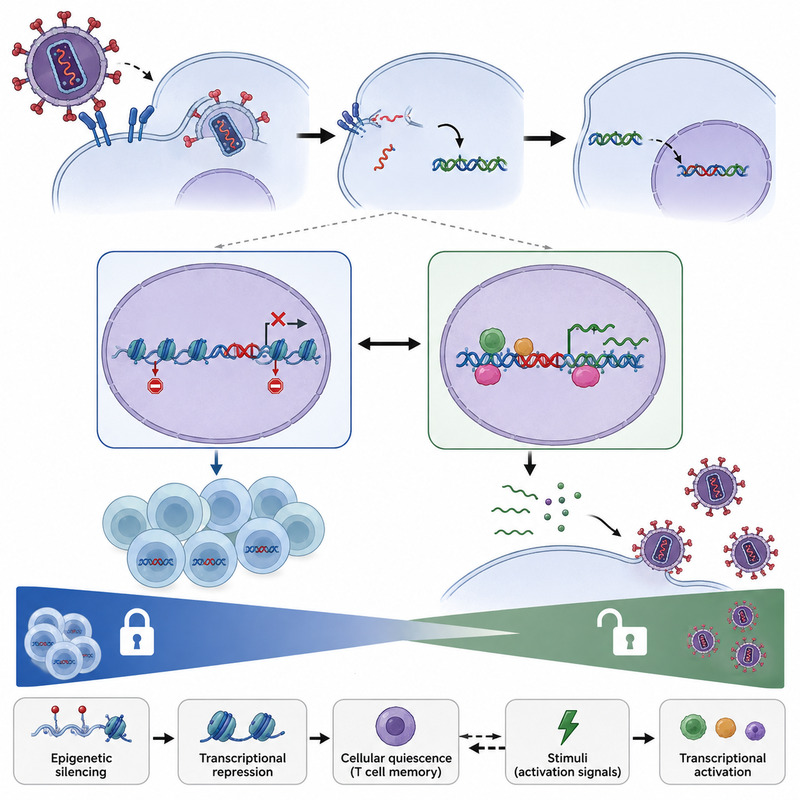
Revisiting HIV Latency: Molecular Mechanisms, Therapeutic Barriers, and Emerging Opportunities for Cure
1
Department of Biology, College of Science in Zulfi, Majmaah University, Al Majmaah 11952, Saudi Arabia
2
Department of Medical Laboratory Sciences, College of Applied Medical Sciences, Majmaah University, Al Majmaah 11952, Saudi Arabia.
3
Microbiology and Immunology Department, Veterinary Research Institute, National Research Centre, Dokki, Giza 12622, Egypt.
Submission date: 2026-04-19
Final revision date: 2026-06-08
Acceptance date: 2026-06-15
Online publication date: 2026-07-28
Publication date: 2026-07-28
Corresponding author
Vijayakumar Rajendran
Department of Biology, College of Science in Zulfi, Majmaah University, 11952, Al Majmaah, Saudi Arabia
Department of Biology, College of Science in Zulfi, Majmaah University, 11952, Al Majmaah, Saudi Arabia
Journal of Medico Informatics 2026;02(Issue 03):49-62
HIGHLIGHTS
- HIV latency creates reservoirs resistant to antiretroviral therapy and eradication.
- Epigenetic, transcriptional, and cellular mechanisms collectively sustain HIV proviral silencing.
- Shock-and-kill and block-and-lock offer complementary therapeutic strategies for HIV cure.
- Immune checkpoint blockade, CAR-T cells, and antibodies enhance reservoir clearance.
- AI-driven screening and personalized modeling accelerate optimized latency-targeting therapeutics.
KEYWORDS
TOPICS
ABSTRACT
Viral latency remains one of the major barriers to the prevention and treatment of Human Immunodeficiency Virus (HIV) infection. Despite effective antiretroviral therapy (ART), HIV persists in latent cellular reservoirs, necessitating lifelong treatment and preventing complete viral eradication. This review comprehensively explores the molecular mechanisms underlying HIV latency, therapeutic barriers, and emerging opportunities toward a functional or sterilizing cure. HIV latency is regulated through complex interactions involving integration site heterogeneity, transcriptional repression, chromatin remodeling, and epigenetic modifications that collectively maintain viral dormancy. Resting CD4+ T cells serve as the principal latent reservoir; however, persistence also occurs within lymphoid tissues, gut-associated lymphoid tissues, and the central nervous system, creating sanctuary sites resistant to immune surveillance and pharmacological intervention. Current cure strategies include the “shock and kill” approach using latency-reversing agents such as histone deacetylase inhibitors, bromodomain inhibitors, and protein kinase C agonists, as well as the “block and lock” strategy employing Tat inhibitors and epigenetic silencing agents to achieve durable viral suppression. Immunotherapeutic approaches, including immune checkpoint inhibitors, chimeric antigen receptor T-cell therapy, and broadly neutralizing antibodies, have demonstrated promising potential but remain limited by incomplete reservoir clearance, toxicity, and viral escape. Clinical translation is further complicated by difficulties in reservoir quantification, ethical concerns, and implementation challenges in resource-limited settings. Emerging technologies, particularly artificial intelligence-assisted drug discovery and personalized therapeutic modeling, provide new opportunities for optimizing HIV cure strategies. Future progress will require interdisciplinary collaboration, equitable healthcare access, and innovative interventions targeting both viral persistence and host immune dynamics.
ABBREVIATIONS
HIV – Human Immunodeficiency Virus
ART – Antiretroviral Therapy
LTR – Long Terminal Repeat
CD4+ – Cluster of Differentiation 4 Positive
CNS – Central Nervous System
GALT – Gut-Associated Lymphoid Tissue
VOA – Viral Outgrowth Assay
qPCR – Quantitative Polymerase Chain Reaction
HDAC – Histone Deacetylase
HMT – Histone Methyltransferase
PRC2 – Polycomb Repressive Complex 2
EZH2 – Enhancer of Zeste Homolog 2
DNMT – DNA Methyltransferase
LRA – Latency-Reversing Agent
PKC – Protein Kinase C
BET – Bromodomain and Extra-Terminal
LPA – Latency-Promoting Agent
bNAb – Broadly Neutralizing Antibody
CAR-T – Chimeric Antigen Receptor T-Cell
TCR – T-Cell Receptor
PD-1 – Programmed Cell Death Protein 1
CTLA-4 – Cytotoxic T-Lymphocyte-Associated Protein 4
TIGIT – T-Cell Immunoreceptor with Ig and ITIM Domains
LAG-3 – Lymphocyte Activation Gene 3
NF-κB – Nuclear Factor Kappa B
NFAT – Nuclear Factor of Activated T Cells
AP-1 – Activator Protein 1
P-TEFb – Positive Transcription Elongation Factor b
RNAP II – RNA Polymerase II
Tat – Trans-Activator of Transcription
TAR – Trans-Activation Response
ACKNOWLEDGEMENTS
The authors thankfully acknowledge the College of Science in Zulfi, Majmaah University, Al Majmaah for providing necessary facilities for performing this study.
FUNDING
This research received no external funding. All work was conducted using institutional resources without dedicated grant support.
CONFLICT OF INTEREST
The authors declare that they have no known financial, personal, academic, or other relationships that could inappropriately influence, or be perceived to influence, the work reported in this manuscript. All authors confirm that there are no competing interests to declare.
PEER REVIEW INFORMATION
Article has been screened for originality
© 2026 The Authors. Published by Aayvu Publications Private Limited under CC BY 4.0.
REFERENCES (58)
1.
Ahlenstiel CL, Symonds G, Kent SJ, Kelleher AD. (2020), Block and Lock HIV Cure Strategies to Control the Latent Reservoir, Front Cell Infect Microbiol, 10:424. doi:10.3389/fcimb.2020.00424. PMID: 32923412.
2.
Alpuche-Lazcano SP, Scarborough RJ, Gatignol A. (2024), MicroRNAs and long non-coding RNAs during transcriptional regulation and latency of HIV and HTLV, Retrovirology, 21(1):5. doi:10.1186/s12977-024-00637-y. PMID: 38424561.
3.
Amie SM, Daly MB, Noble E, Schinazi RF, Bambara RA, Kim B. (2013), Anti-HIV host factor SAMHD1 regulates viral sensitivity to nucleoside reverse transcriptase inhibitors via modulation of cellular deoxyribonucleoside triphosphate (dNTP) levels, J Biol Chem, 288(28):20683-91. doi:10.1074/jbc.M113.472159. PMID: 23744077.
4.
Banga R, Perreau M. (2024), The multifaceted nature of HIV tissue reservoirs, Curr Opin HIV AIDS, 19(3):116-123. doi:10.1097/COH.0000000000000851. PMID: 38547340.
5.
Bloom BR, Atun R, Cohen T, Dye C, Fraser H, Gomez GB, Knight G, Murray M, Nardell E, Rubin E, Salomon J, Vassall A, Volchenkov G, White R, Wilson D, Yadav P, (2017), Tuberculosis. In: Holmes KK, Bertozzi S, Bloom BR, Jha P (eds) Major Infectious Diseases. 10.1596/978-1-4648-0524-0_ch11, 3rd edn, Washington (DC) doi:10.1596/978-1-4648-0524-0_ch11.
6.
Bouabida K, Chaves BG, Anane E. (2023), Challenges and barriers to HIV care engagement and care cascade: viewpoint, Front Reprod Health, 5:1201087. doi:10.3389/frph.2023.1201087. PMID: 37547803.
7.
Bukrinsky M, Adzhubei A. (1999), Viral protein R of HIV-1, Rev Med Virol, 9(1):39-49. doi:10.1002/(sici)1099-1654(199901/03)9:1<39::aid-rmv235>3.0.co;2-3. PMID: 10371671.
8.
Cary DC, Fujinaga K, Peterlin BM. (2016), Molecular mechanisms of HIV latency, J Clin Invest, 126(2):448-54. doi:10.1172/JCI80565. PMID: 26731470.
9.
Castro-Gonzalez S, Colomer-Lluch M, Serra-Moreno R. (2018), Barriers for HIV Cure: The Latent Reservoir, AIDS Res Hum Retroviruses, 34(9):739-759. doi:10.1089/AID.2018.0118. PMID: 30056745.
10.
Chen J, Zhou T, Zhang Y, Luo S, Chen H, Chen D, Li C, Li W. (2022), The reservoir of latent HIV, Front Cell Infect Microbiol, 12:945956. doi:10.3389/fcimb.2022.945956. PMID: 35967854.
11.
Clark E, Nava B, Caputi M. (2017), Tat is a multifunctional viral protein that modulates cellular gene expression and functions, Oncotarget, 8(16):27569-27581. doi:10.18632/oncotarget.15174. PMID: 28187438.
12.
Contreras X, Lenasi T, Peterlin BM. (2006), HIV latency: present knowledge, future directions, Future Virol, 1(6):733-745. doi:10.2217/17460794.1.6.733. PMID: 19448843.
13.
Dube K, Peterson B, Jones NL, Onorato A, Carter WB, Dannaway C, Johnson S, Hayes R, Hill M, Maddox R, Riley JL, Shull J, Metzger D, Montaner LJ. (2023), Community engagement group model in basic and biomedical research: lessons learned from the BEAT-HIV Delaney Collaboratory towards an HIV-1 cure, Res Involv Engagem, 9(1):39. doi:10.1186/s40900-023-00449-y. PMID: 37291622.
14.
Fromentin R, Bakeman W, Lawani MB, Khoury G, Hartogensis W, DaFonseca S, Killian M, Epling L, Hoh R, Sinclair E, Hecht FM, Bacchetti P, Deeks SG, Lewin SR, Sekaly RP, Chomont N. (2016), CD4+ T Cells Expressing PD-1, TIGIT and LAG-3 Contribute to HIV Persistence during ART, PLoS Pathog, 12(7):e1005761. doi:10.1371/journal.ppat.1005761. PMID: 27415008.
15.
Gibaut QMR, Mori LP, Valente ST. (2023), HIV-1 transcriptional modulation: novel host factors and prospective therapeutic strategies, Curr Opin HIV AIDS, 18(5):264-272. doi:10.1097/COH.0000000000000808. PMID: 37535041.
16.
Han Q, Zhang X, Chen L, Zhang Y. (2026), Chimeric antigen receptor T‑cell therapy in chronic viral infections: a review, J Transl Med, 24(1):167. doi:10.1186/s12967-025-07582-0. PMID: 41535864.
17.
Jiang G, Dandekar S. (2015), Targeting NF-kappaB signaling with protein kinase C agonists as an emerging strategy for combating HIV latency, AIDS Res Hum Retroviruses, 31(1):4-12. doi:10.1089/AID.2014.0199. PMID: 25287643.
18.
Jin R, Zhang L. (2025), AI applications in HIV research: advances and future directions, Front Microbiol, 16:1541942. doi:10.3389/fmicb.2025.1541942. PMID: 40051479.
19.
Kang X, Cheemalamarri SK, Yin Q. (2025), Organoid: a promising solution to current challenges in cancer immunotherapy, NPJ Biomed Innov, 2(1) doi:10.1038/s44385-025-00051-9. PMID: 42032105.
20.
Kauder SE, Bosque A, Lindqvist A, Planelles V, Verdin E. (2009), Epigenetic regulation of HIV-1 latency by cytosine methylation, PLoS Pathog, 5(6):e1000495. doi:10.1371/journal.ppat.1000495. PMID: 19557157.
21.
Linas BP, Barter DM, Leff JA, DiLorenzo M, Schackman BR, Horsburgh CR, Assoumou SA, Salomon JA, Weinstein MC, Kim AY, Freedberg KA. (2014), The cost-effectiveness of improved hepatitis C virus therapies in HIV/hepatitis C virus coinfected patients, AIDS, 28(3):365-76. doi:10.1097/QAD.0000000000000093. PMID: 24670522.
22.
Lu Y, Li H, Dong R, Zhang M, Dong X, Yang C, Wang X, Ye J. (2025), Global and regional disease burden of HIV/AIDS from 1990 to 2021 and projections to 2030, BMC Public Health, 25(1):1928. doi:10.1186/s12889-025-23121-4. PMID: 40413521.
23.
Lungu C, Banga R, Gruters RA, Procopio FA. (2021), Inducible HIV-1 Reservoir Quantification: Clinical Relevance, Applications and Advancements of TILDA, Front Microbiol, 12:686690. doi:10.3389/fmicb.2021.686690. PMID: 34211450.
24.
Ma C, Zhang H, Rao Y, Jiang X, Liu B, Sun Z, Song Z, Gao Y, Cui Y, Liu X, Li Z. (2025), AI-driven virtual cell models in preclinical research: technical pathways, validation mechanisms, and clinical translation potential, NPJ Digit Med, 9(1):25. doi:10.1038/s41746-025-02198-6. PMID: 41381900.
25.
Marsden MD, Zack JA. (2009), Eradication of HIV: current challenges and new directions, J Antimicrob Chemother, 63(1):7-10. doi:10.1093/jac/dkn455. PMID: 18984648.
26.
Marsden MD, Zack JA. (2010), Establishment and maintenance of HIV latency: model systems and opportunities for intervention, Future Virol, 5(1):97-109. doi:10.2217/fvl.09.70. PMID: 21318097.
27.
Massanella M, Yek C, Lada SM, Nakazawa M, Shefa N, Huang K, Richman DD. (2018), Improved assays to measure and characterize the inducible HIV reservoir, EBioMedicine, 36:113-121. doi:10.1016/j.ebiom.2018.09.036. PMID: 30316868.
28.
Mattei S, Anders M, Konvalinka J, Krausslich HG, Briggs JA, Muller B. (2014), Induced maturation of human immunodeficiency virus, J Virol, 88(23):13722-31. doi:10.1128/JVI.02271-14. PMID: 25231305.
29.
Mayer KH, Allan-Blitz LT. (2019), Similar, but different: drivers of the disproportionate HIV and sexually transmitted infection burden of key populations, J Int AIDS Soc, 22 Suppl 6(Suppl Suppl 6):e25344. doi:10.1002/jia2.25344. PMID: 31468653.
30.
Mbhele N, Chimukangara B, Tyers L, Maldarelli F, Redd AD. (2025), Advancements in single-cell techniques for examining the HIV reservoir: pathways to a cure, mBio, 16(7):e0065525. doi:10.1128/mbio.00655-25. PMID: 40488537.
31.
Mbonye U, Karn J. (2011), Control of HIV latency by epigenetic and non-epigenetic mechanisms, Curr HIV Res, 9(8):554-67. doi:10.2174/157016211798998736. PMID: 22211660.
32.
Mbonye U, Karn J. (2014), Transcriptional control of HIV latency: cellular signaling pathways, epigenetics, happenstance and the hope for a cure, Virology, 454-455:328-39. doi:10.1016/j.virol.2014.02.008. PMID: 24565118.
33.
Meissen H, Gong MN, Wong AI, Zimmerman JJ, Nadkarni N, Kane-Gil SL, Amador-Castaneda J, Bailey H, Brown SM, DePriest AD, Mary Eche I, Narayan M, Provencio JJ, Sederstrom NO, Sevransky J, Tremper J, Aslakson RA. (2022), The Future of Critical Care: Optimizing Technologies and a Learning Healthcare System to Potentiate a More Humanistic Approach to Critical Care, Crit Care Explor, 4(3):e0659. doi:10.1097/CCE.0000000000000659. PMID: 35308462.
34.
Moar P, Premeaux TA, Atkins A, Ndhlovu LC. (2023), The latent HIV reservoir: current advances in genetic sequencing approaches, mBio, 14(5):e0134423. doi:10.1128/mbio.01344-23. PMID: 37811964.
35.
Mousseau G, Kessing CF, Fromentin R, Trautmann L, Chomont N, Valente ST. (2015), The Tat Inhibitor Didehydro-Cortistatin A Prevents HIV-1 Reactivation from Latency, mBio, 6(4):e00465. doi:10.1128/mBio.00465-15. PMID: 26152583.
36.
Mouzakis A, Petrakis V, Tryfonopoulou E, Panopoulou M, Panagopoulos P, Chlichlia K. (2025), Mechanisms of Immune Evasion in HIV-1: The Role of Virus-Host Protein Interactions, Curr Issues Mol Biol, 47(5) doi:10.3390/cimb47050367. PMID: 40699766.
37.
Pellaers E, Denis A, Debyser Z. (2024), New latency-promoting agents for a block-and-lock functional cure strategy, Curr Opin HIV AIDS, 19(3):95-101. doi:10.1097/COH.0000000000000844. PMID: 38457209.
38.
Peterson JJ, Lewis CA, Burgos SD, Manickam A, Xu Y, Rowley AA, Clutton G, Richardson B, Zou F, Simon JM, Margolis DM, Goonetilleke N, Browne EP. (2023), A histone deacetylase network regulates epigenetic reprogramming and viral silencing in HIV-infected cells, Cell Chem Biol, 30(12):1617-1633 e9. doi:10.1016/j.chembiol.2023.11.009. PMID: 38134881.
39.
Quinn TC. (2008), HIV epidemiology and the effects of antiviral therapy on long-term consequences, AIDS, 22 Suppl 3(Suppl 3):S7-12. doi:10.1097/01.aids.0000327510.68503.e8. PMID: 18845925.
40.
Richman DD. (2011), Introduction: challenges to finding a cure for HIV infection, Curr Opin HIV AIDS, 6(1):1-3. doi:10.1097/COH.0b013e328340ffa6. PMID: 21242886.
41.
Rossouw T, Tucker JD, van Zyl GU, Sikwesi K, Godfrey C. (2017), Barriers to HIV remission research in low- and middle-income countries, J Int AIDS Soc, 20(1):21521. doi:10.7448/IAS.20.1.21521. PMID: 28605173.
42.
Rouzioux C, Richman D. (2013), How to best measure HIV reservoirs?, Curr Opin HIV AIDS, 8(3):170-5. doi:10.1097/COH.0b013e32835fc619. PMID: 23564004.
43.
Saksena NK, Wang B, Zhou L, Soedjono M, Ho YS, Conceicao V. (2010), HIV reservoirs in vivo and new strategies for possible eradication of HIV from the reservoir sites, HIV AIDS (Auckl), 2:103-22. doi:10.2147/hiv.s6882. PMID: 22096389.
44.
Salahong T, Schwartz C, Sungthong R. (2021), Are BET Inhibitors yet Promising Latency-Reversing Agents for HIV-1 Reactivation in AIDS Therapy?, Viruses, 13(6) doi:10.3390/v13061026. PMID: 34072421.
45.
Sanchez AL, Mills C, Coley D, Hoskins K, Momplaisir F, Gross R, Brady KA, Beidas RS. (2025), Systemic inequities, dignity, and trust in the context of HIV care: a qualitative analysis, Int J Equity Health, 24(1):123. doi:10.1186/s12939-025-02481-8. PMID: 40329302.
46.
Schlenter WW, Blessing R, Heintz B. (1989), [Conservative treatment of chronic sinusitis. Success of oral bacterial lysate therapy], Laryngorhinootologie, 68(12):671-4. doi:10.1055/s-2007-998427. PMID: 2692576.
47.
Shankar M, Charantimath U, Dandappanavar A, Hazfiarini A, Pujar YV, Somannavar MS, Rushwan S, Vogel JP, Gulmezoglu AM, Goudar SS, Bohren MA. (2025), Factors Influencing Pregnant Women's Participation in Randomised Clinical Trials in India: A Qualitative Study, BJOG, 132(6):772-781. doi:10.1111/1471-0528.18074. PMID: 39871821.
48.
Shin SY, Tahmida M, Beliakova-Bethell N, LaMere SA. (2026), Epigenetic mechanisms of retroviral regulation: a comparative review, Epigenetics Chromatin, 19(1) doi:10.1186/s13072-025-00659-6. PMID: 41634739.
49.
Shirakawa K, Chavez L, Hakre S, Calvanese V, Verdin E. (2013), Reactivation of latent HIV by histone deacetylase inhibitors, Trends Microbiol, 21(6):277-85. doi:10.1016/j.tim.2013.02.005. PMID: 23517573.
50.
Siliciano JD, Siliciano RF. (2000), Latency and viral persistence in HIV-1 infection, J Clin Invest, 106(7):823-5. doi:10.1172/JCI11246. PMID: 11018068.
51.
Siliciano RF, Greene WC. (2011), HIV latency, Cold Spring Harb Perspect Med, 1(1):a007096. doi:10.1101/cshperspect.a007096. PMID: 22229121.
52.
Singh MB, Sartor GC. (2020), BET bromodomains as novel epigenetic targets for brain health and disease, Neuropharmacology, 181:108306. doi:10.1016/j.neuropharm.2020.108306. PMID: 32946883.
53.
Thavarajah JJ, Honge BL, Wejse CM. (2024), The Use of Broadly Neutralizing Antibodies (bNAbs) in HIV-1 Treatment and Prevention, Viruses, 16(6) doi:10.3390/v16060911. PMID: 38932203.
54.
Tyagi M, Karn J. (2007), CBF-1 promotes transcriptional silencing during the establishment of HIV-1 latency, EMBO J, 26(24):4985-95. doi:10.1038/sj.emboj.7601928. PMID: 18007589.
55.
Van der Sluis RM, Kumar NA, Pascoe RD, Zerbato JM, Evans VA, Dantanarayana AI, Anderson JL, Sekaly RP, Fromentin R, Chomont N, Cameron PU, Lewin SR. (2020), Combination Immune Checkpoint Blockade to Reverse HIV Latency, J Immunol, 204(5):1242-1254. doi:10.4049/jimmunol.1901191. PMID: 31988180.
56.
Van Gulck E, Pardons M, Nijs E, Verheyen N, Dockx K, Van Den Eynde C, Battivelli E, Vega J, Florence E, Autran B, Archin NM, Margolis DM, Katlama C, Hamimi C, Van Den Wyngaert I, Eyassu F, Vandekerckhove L, Boden D. (2023), A truncated HIV Tat demonstrates potent and specific latency reversal activity, Antimicrob Agents Chemother, 67(11):e0041723. doi:10.1128/aac.00417-23. PMID: 37874295.
57.
Weissman S, Yeh YH, Viazmenski M, Kim R, Collora JA, Steinhauser S, Ho YC. (2026), HIV-1 transcription dominates over host gene activity at the HIV-1 integration site, mBio, 17(1):e0275525. doi:10.1128/mbio.02755-25. PMID: 41277870.
58.
Yu ZJ, Mosher EP, Bumpus NN. (2021), Pharmacogenomics of Antiretroviral Drug Metabolism and Transport, Annu Rev Pharmacol Toxicol, 61:565-585. doi:10.1146/annurev-pharmtox-021320-111248. PMID: 32960701.
| ISSN: | 3108-2696 |

We process personal data collected when visiting the website. The function of obtaining information about users and their behavior is carried out by voluntarily entered information in forms and saving cookies in end devices. Data, including cookies, are used to provide services, improve the user experience and to analyze the traffic in accordance with the Privacy policy. Data are also collected and processed by Google Analytics tool (more).
You can change cookies settings in your browser. Restricted use of cookies in the browser configuration may affect some functionalities of the website.
You can change cookies settings in your browser. Restricted use of cookies in the browser configuration may affect some functionalities of the website.